
My Dog Coughs After Drinking Water
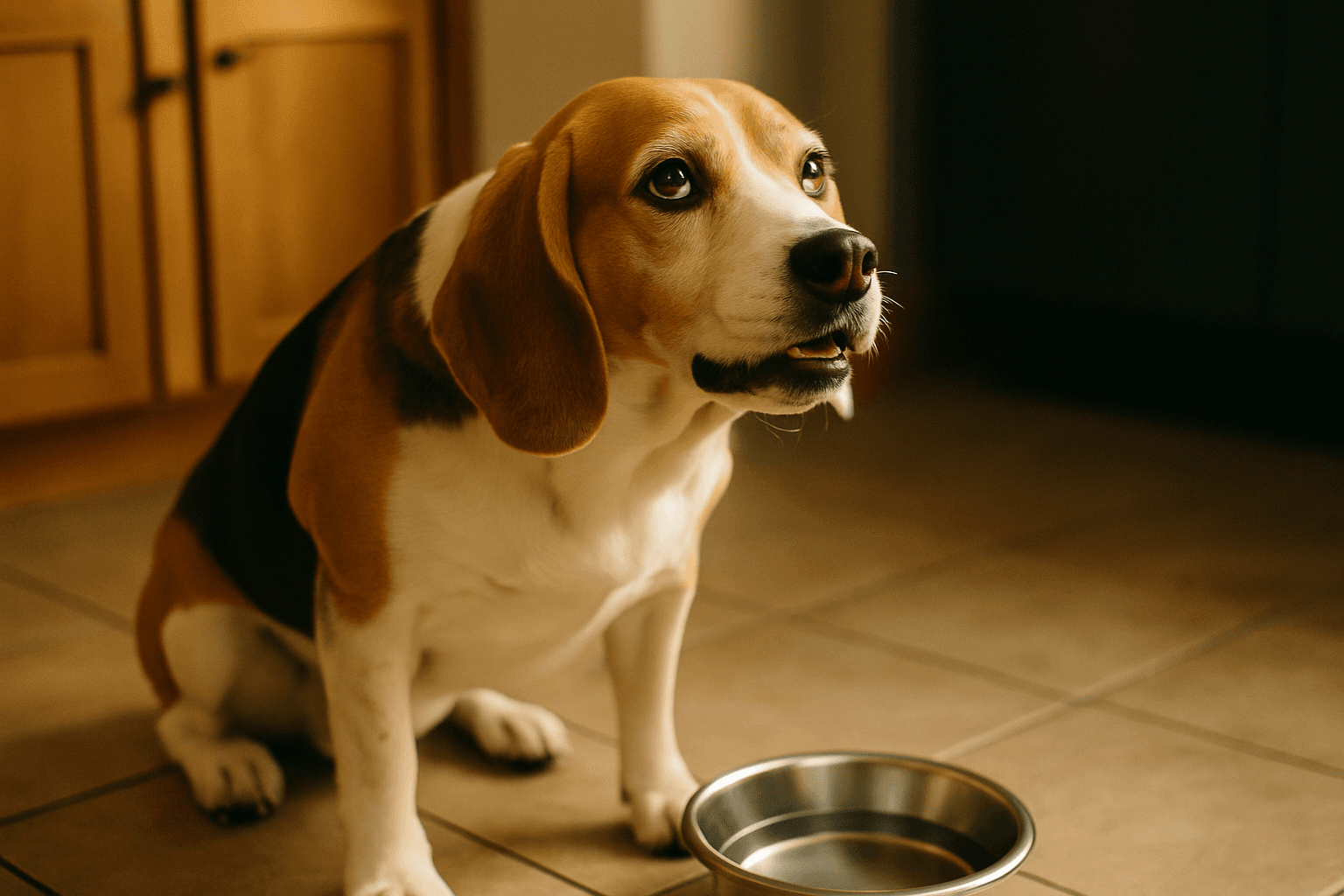
If your dog coughs or gags every time they take a drink, it is not normal -- but it is not always serious either. Many dogs simply drink too fast and water goes down the wrong pipe. But consistent coughing after drinking can point to tracheal collapse, kennel cough, or other treatable conditions. Here's how to figure out what is going on.
Common Causes
- Drinking too fast -- water enters the trachea (windpipe) instead of the esophagus. This is the most common and least concerning cause. Dogs that gulp water after exercise or in hot weather are especially prone.
- Tracheal collapse -- the cartilage rings in the trachea weaken and flatten, narrowing the airway. Very common in small breeds (Yorkies, Pomeranians, Chihuahuas, toy Poodles). Produces a distinctive "honking" cough that gets worse with drinking, eating, excitement, or pulling on a collar.
- Kennel cough (infectious tracheobronchitis) -- a contagious respiratory infection that causes a dry, hacking cough. Often sounds like something is stuck in the throat. Typically picked up at boarding facilities, dog parks, or grooming salons. Usually resolves in 1-3 weeks.
- Reverse sneezing -- not actually a cough, but often mistaken for one. A spasm of the soft palate that causes rapid, forceful inhalation through the nose. Sounds alarming but is almost always harmless and stops on its own.
- Laryngeal paralysis -- the muscles that open the larynx (voice box) stop working properly, causing the airway to partially obstruct. Most common in older large breeds (Labradors, Golden Retrievers, Great Danes). Causes noisy breathing, gagging while drinking, and exercise intolerance.
- Heart disease -- an enlarged heart can press on the trachea and trigger coughing, especially after drinking or lying down. More common in senior dogs and certain breeds (Cavalier King Charles Spaniels, Dobermans).
- Megaesophagus -- the esophagus loses its ability to move food and water to the stomach. Causes regurgitation (different from vomiting) and coughing after eating or drinking.
When It's Normal vs When to Worry
Probably normal:
- Occasional cough after drinking fast -- especially after exercise or in hot weather
- Single cough followed by immediate recovery
- Dog is otherwise healthy, energetic, and eating normally
- Happens rarely, not every time they drink
Time to worry:
- Coughing every time they drink water -- consistent pattern
- Honking cough that also happens with excitement or on a leash
- Cough that is getting worse over time
- Wet, productive cough -- sounds like fluid is being brought up
- Coughing combined with difficulty breathing or noisy breathing
- Blue or purple gums during or after coughing episodes
- Cough lasting more than 2 weeks
What to Do Right Now
- Slow down their drinking. Add ice cubes to the water bowl so your dog has to lick around them. Use a slow-feed water bowl or a lick mat with water. Offer smaller amounts of water more frequently instead of one large bowl.
- Try an elevated water bowl. Raising the bowl to chest height reduces the neck angle and can help dogs with tracheal issues drink more comfortably.
- Switch from a collar to a harness. If your dog pulls on walks, a collar puts pressure on the trachea and can worsen coughing. A harness distributes the pressure across the chest instead.
- Listen to the cough carefully. A dry honking sound points to tracheal collapse. A wet, productive cough suggests infection. A gagging sound with food or water regurgitation suggests megaesophagus or laryngeal issues. This information helps your vet diagnose faster.
- Record a video. Coughing does not always happen at the vet's office. Record your dog coughing on your phone so you can show the vet exactly what it sounds and looks like.
- Monitor for 1-2 weeks. If the cough is occasional and your dog is otherwise healthy, try the slow-drinking solutions above. If it persists, worsens, or is accompanied by other symptoms, schedule a vet visit.
When to Call the Vet
Contact your veterinarian if you notice any of these:
- Coughing after drinking that happens every single time, not just occasionally
- A honking cough -- especially in a small breed dog
- Wet, productive cough that brings up fluid or mucus
- Difficulty breathing, noisy breathing, or panting at rest
- Blue or purple gums (cyanosis) -- this is an emergency, go now
- Cough that has persisted for more than 2 weeks
- Cough combined with lethargy, weight loss, or exercise intolerance
- Regurgitation of food or water (coming back up undigested)
Your vet will likely recommend a chest X-ray to evaluate the trachea, heart, and lungs. For tracheal collapse, treatment ranges from cough suppressants and weight management in mild cases to surgery in severe cases.
Walk through our symptom checker to narrow it down.
Answer a few quick questions to find out if you need the vet right now.