
My Dog Constantly Licks His Paws
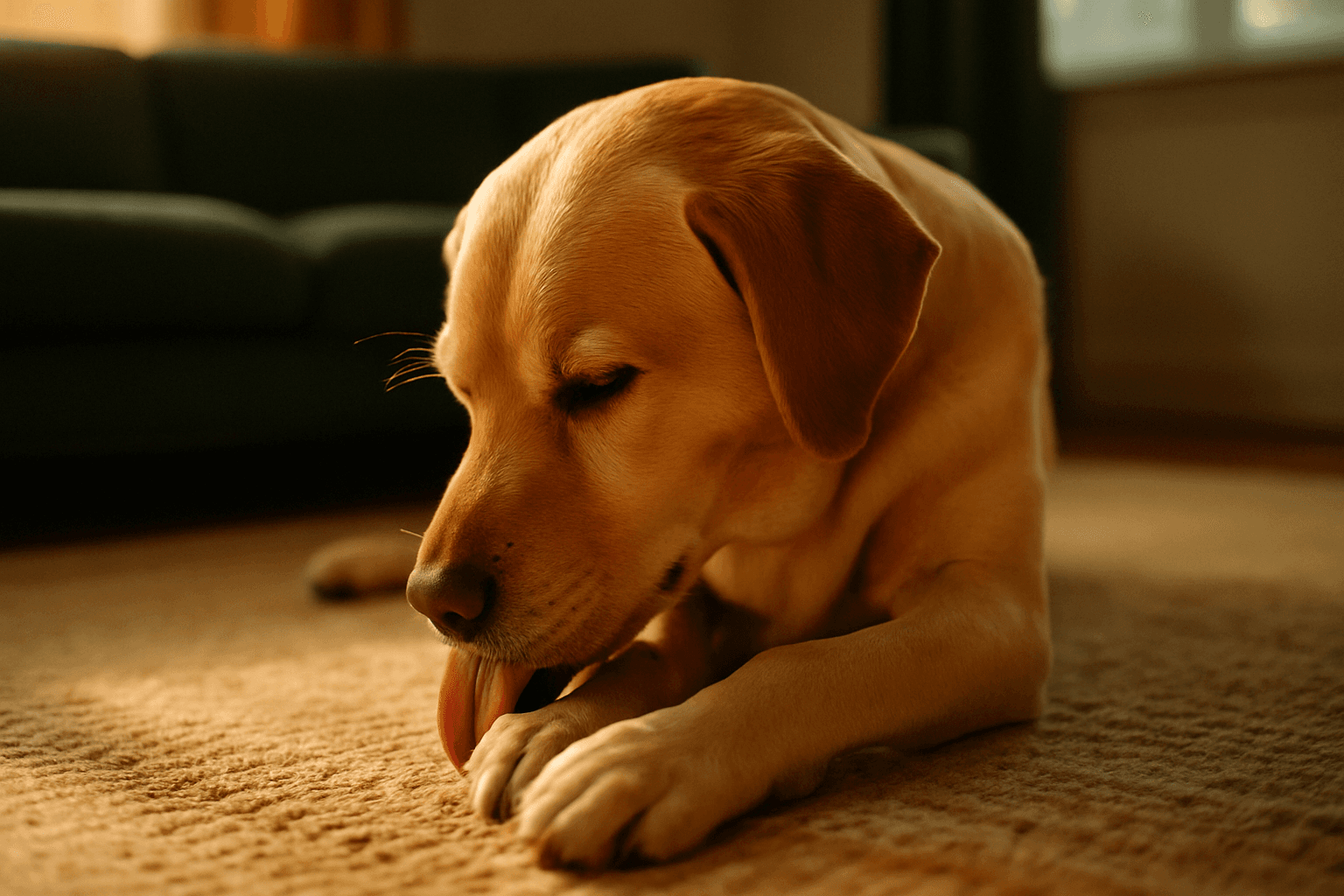
If your dog will not stop licking his paws, you are not imagining things -- and it is not just a quirky habit. Excessive paw licking almost always points to an underlying cause, whether that is allergies, an infection, something stuck between the toes, or stress. Here's what it means and what to do about it.
Common Causes of Paw Licking
- Environmental allergies. Pollen, grass, mold, and dust mites are the most common triggers. Dogs absorb allergens through their paws, which is why the feet are often the first place symptoms show up.
- Food allergies. Chicken, beef, dairy, and grains can cause chronic itching. Food allergies tend to cause year-round symptoms rather than seasonal flare-ups.
- Yeast infection. Warm, moist paw pads are a perfect environment for yeast overgrowth. A musty, corn-chip-like smell is the telltale sign.
- Anxiety or boredom. Some dogs develop compulsive licking as a self-soothing behavior, similar to nail biting in humans. This is more common in high-energy breeds that are under-exercised.
- Foreign object. A thorn, foxtail, splinter, or small rock wedged between the toes will cause focused licking on one paw.
- Dry skin or contact irritation. Road salt in winter, lawn chemicals, and hot pavement can all irritate paw pads and trigger licking.
When It's Normal vs When to Worry
Normal: Occasional paw licking after walks or meals is basic grooming. Dogs clean their feet just like cats do. A few licks here and there is nothing to worry about.
Time to investigate: If the licking is constant, intense, or focused -- especially if you notice rust-colored saliva staining on the fur, redness between the toes, swelling, limping, or a yeasty smell -- something is going on. Dogs with allergies often lick their paws AND shake their heads or scratch their ears, so look for that pattern too.
What to Do Right Now
- Inspect the paws. Look between the toes and pads for redness, swelling, cuts, thorns, or anything stuck. Use a flashlight.
- Wipe the paws. After every walk, wipe all four paws with a damp cloth or pet-safe wipe to remove allergens, salt, or chemicals.
- Check for a pattern. Is it one paw or all four? Seasonal or year-round? After walks or random? This information helps your vet narrow it down fast.
- Try an oatmeal soak. A lukewarm foot soak with colloidal oatmeal can soothe irritated skin and provide temporary relief.
- Increase exercise and enrichment. If boredom could be a factor, add an extra walk, puzzle toys, or training sessions to redirect the behavior.
- Schedule a vet visit if the licking has persisted for more than a week or the paws look red, swollen, or infected.
When to Call the Vet
See your vet if you notice any of the following:
- Red, swollen, or hot paw pads
- Open sores, bleeding, or discharge between the toes
- Strong yeasty or foul odor from the paws
- Limping or reluctance to walk
- Rust-colored saliva staining that keeps getting worse
- Licking combined with ear infections or face rubbing (strong allergy indicator)
Your vet may recommend allergy testing, a food elimination trial (8 to 12 weeks on a novel protein), or medications like Apoquel or Cytopoint injections for relief while you identify the root cause.
Use our symptom checker to narrow down what might be going on.
Answer a few quick questions to find out if you need the vet right now.