
My Dog Collapsed and Went Limp
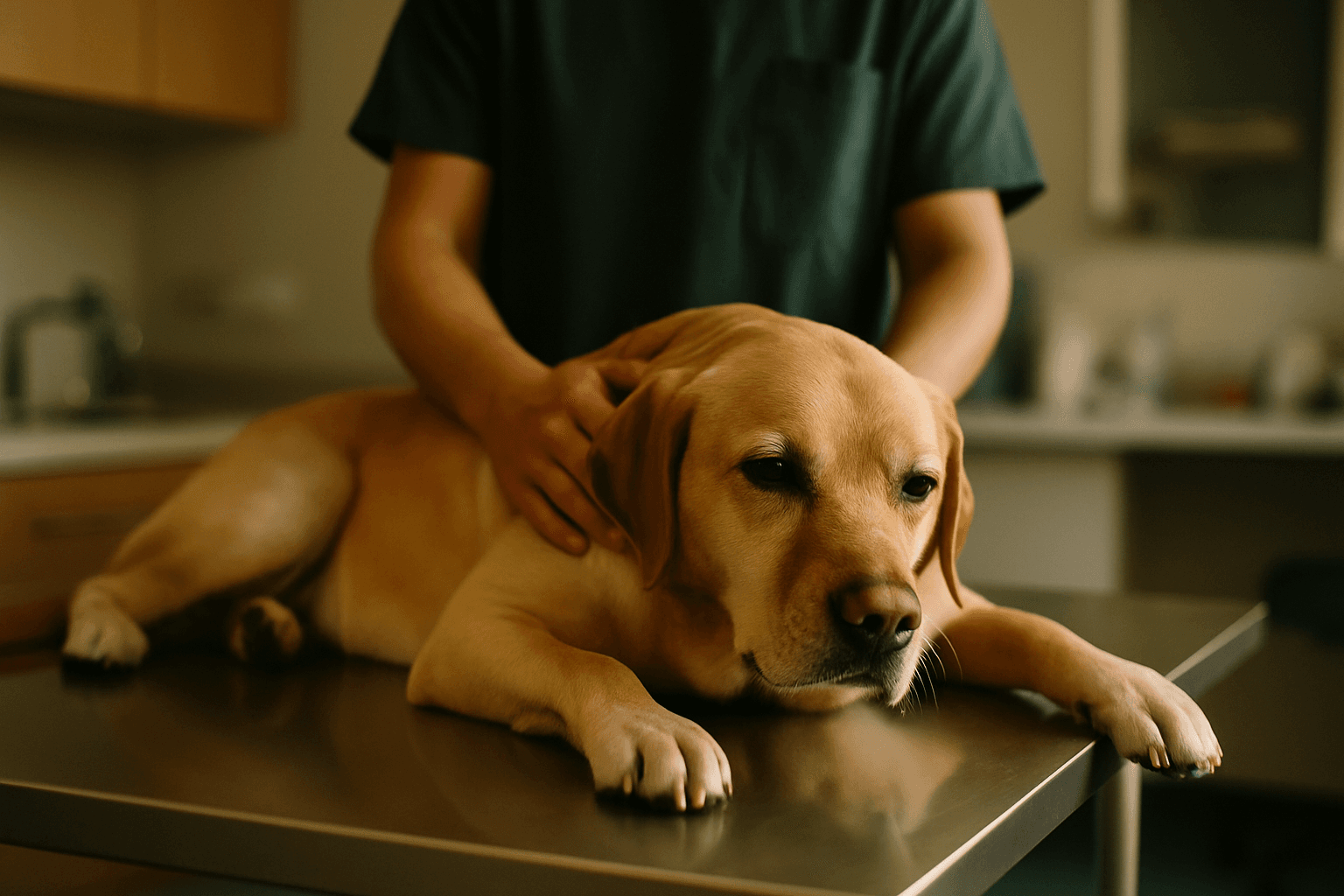
A dog that collapses and goes limp needs emergency veterinary care. This can be caused by heart problems, bloat (GDV), heatstroke, seizures, low blood sugar, severe allergic reactions, or internal bleeding. Even if your dog recovers quickly and seems fine, the underlying cause can be life-threatening. Here is what to do and what may be happening.
What to Check Immediately
- Is the dog breathing? Watch for chest movement. Hold your hand near their nose to feel for airflow.
- Check gum color. Lift the lip and look at the gums. Pink is normal. White or very pale means shock or blood loss. Blue or purple means oxygen deprivation. Bright red may mean heatstroke.
- Feel for a pulse. Press gently on the inside of the upper back leg (femoral artery). A normal resting heart rate for dogs is 60-140 beats per minute, depending on size.
- Check the belly. Is it swollen, hard, or distended? This could indicate bloat/GDV, which is immediately life-threatening.
- Note the time. How long did the collapse last? Did the dog twitch or go rigid (seizure) or just go limp (syncope/fainting)?
Common Causes of Sudden Collapse
- Heart arrhythmia or cardiac disease: The most common cause of true syncope (fainting). The dog collapses, goes limp, and then recovers within seconds to minutes. Breeds like Boxers, Dobermans, and Cavalier King Charles Spaniels are predisposed.
- Bloat/GDV (gastric dilatation-volvulus): The stomach fills with gas and twists. Causes collapse, distended abdomen, and unproductive retching. Fatal without surgery. Most common in large, deep-chested breeds.
- Heatstroke: Body temperature rises dangerously high. Heavy panting, drooling, bright red gums, then collapse. Can happen in minutes on hot days or in parked cars.
- Seizure: The dog may go rigid, paddle their legs, drool, or lose bladder/bowel control. Seizures typically last 30 seconds to 2 minutes. The dog is usually confused and disoriented afterward.
- Hypoglycemia (low blood sugar): Most common in small breeds, puppies, and diabetic dogs. Causes weakness, trembling, disorientation, then collapse. Rubbing honey or corn syrup on the gums can help temporarily.
- Anaphylaxis: Severe allergic reaction, often to bee stings, vaccines, or certain foods. Can cause facial swelling, vomiting, diarrhea, and cardiovascular collapse within minutes.
- Internal bleeding: From a ruptured tumor (common with splenic hemangiosarcoma in older dogs), trauma, or rat poison ingestion. The dog may have pale gums and a weak pulse.
Brief Collapse That Resolves Quickly
If your dog collapsed but then got up and seemed totally normal within a minute or two, this is most likely syncope -- a brief loss of consciousness caused by reduced blood flow to the brain. The most common cause is a heart rhythm abnormality.
Do not assume everything is fine just because the dog recovered. Cardiac syncope can progress to sudden death. Your vet should perform an ECG and may recommend a Holter monitor (a portable heart monitor worn for 24 hours) to catch intermittent arrhythmias.
When to Go to the Emergency Vet
Go immediately if any of the following apply:
- The dog is unconscious and not responding
- Gums are white, blue, or purple
- The belly is swollen or hard
- The dog is struggling to breathe or not breathing
- There is no pulse or the heartbeat is very fast or irregular
- The collapse followed exposure to heat, a bee sting, or a known toxin
- There is blood in the stool, vomit, or coming from any body opening
- The dog had a seizure lasting longer than 2 minutes
Even if your dog collapsed briefly and recovered, schedule a vet appointment as soon as possible. Tell them exactly what happened, how long it lasted, and what the dog was doing before and after.
Answer a few quick questions to find out if you need the vet right now.
Our symptom checker can help you understand what might be happening.