
My Dog Broke a Nail
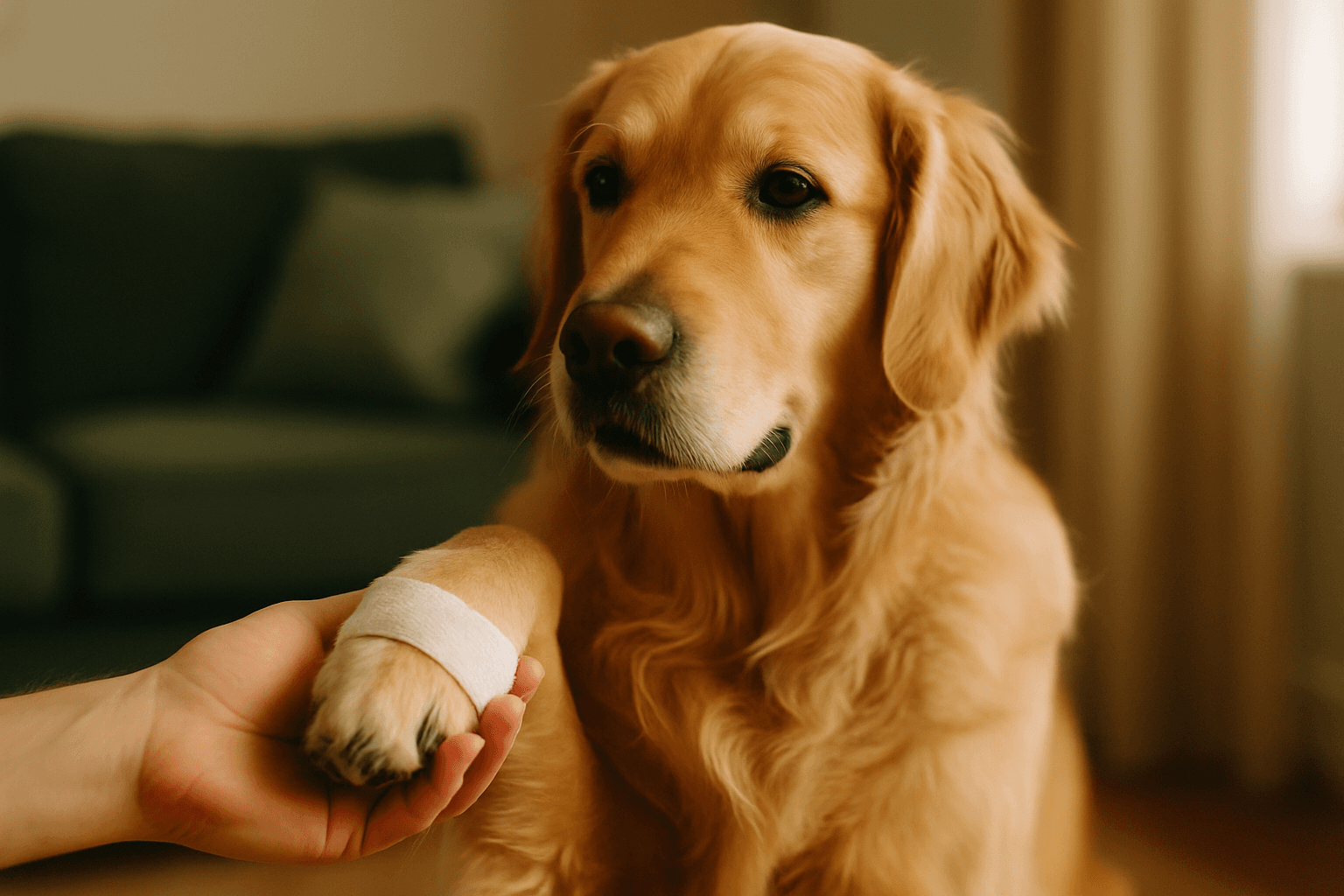
A broken nail is painful and can bleed a lot, but it is usually not a serious emergency. The most important things are to stop the bleeding, prevent infection, and keep your dog from licking the paw. If the nail is dangling, do not pull it off -- let your vet handle that. Here is exactly what to do.
How to Treat a Broken Nail at Home
- Stay calm. Broken nails bleed a lot and your dog will be in pain, but this is manageable.
- Restrain your dog gently. Even friendly dogs may snap when they are in pain. Have someone hold them or wrap them in a towel.
- Stop the bleeding. Apply styptic powder (Kwik Stop) directly to the nail and hold pressure for 30 seconds. No styptic powder? Use cornstarch, flour, or even a bar of soap pressed against the nail.
- Clean the area. Once bleeding stops, gently rinse the paw with clean water or a mild antiseptic solution.
- Protect the paw. Wrap loosely in gauze or a clean cloth. Do not wrap too tightly -- you should be able to slip a finger under the bandage.
- Prevent licking. Put an e-collar (cone) on your dog. Licking introduces bacteria and delays healing.
- Do NOT pull off a dangling nail. Leave it for the vet. Pulling it can damage the nail bed and cause more pain and bleeding.
Why Broken Nails Bleed So Much
Dog nails contain a structure called the quick -- a blood vessel and nerve that runs through the center of the nail. When a nail breaks at or above the quick, it bleeds freely because the blood vessel is exposed. This is the same reason nail trims can bleed if you cut too short. The quick is more exposed in dogs with overgrown nails because it extends further as the nail grows.
Types of Nail Breaks
- Cracked or chipped tip: The nail cracked at the very end, past the quick. Minimal pain and no bleeding. File it smooth to prevent catching.
- Broken at the quick: The nail broke where the blood vessel is. Bleeding, pain, and the dog will likely limp. Treatable at home with styptic powder.
- Hanging or dangling nail: Part of the nail is torn but still attached. Do not pull it off. Wrap the paw and see the vet.
- Nail torn off completely: The entire nail has come off, exposing the raw quick. Very painful. Clean, bandage, and see the vet for pain management and possible antibiotics.
Preventing Nail Breaks
The number one cause of broken nails is overgrown nails. When nails are too long, they catch on carpets, decks, roots, and cracks in pavement. Keep nails trimmed every 2 to 4 weeks. If you can hear clicking when your dog walks on hard floors, the nails are too long.
Pay special attention to dewclaws (the "thumb" nails on the inner side of the paw). These do not touch the ground and never wear down naturally. Neglected dewclaws can grow in a circle and puncture the pad.
When to See the Vet
Most broken nails can be managed at home, but see your vet if:
- Bleeding does not stop after 10 minutes of pressure and styptic powder
- The nail is dangling or hanging by a thread
- The entire nail has been torn off
- You see swelling, redness, discharge, or a bad smell (infection)
- Your dog is still limping after 24 hours
- Your dog will not let you examine or treat the paw
- The same nail keeps breaking (could indicate a nail bed tumor, especially in older dogs)
Answer a few quick questions to find out if you need the vet right now.
Our symptom checker can help you figure out what is going on.