My Dog Ate Raw Chicken
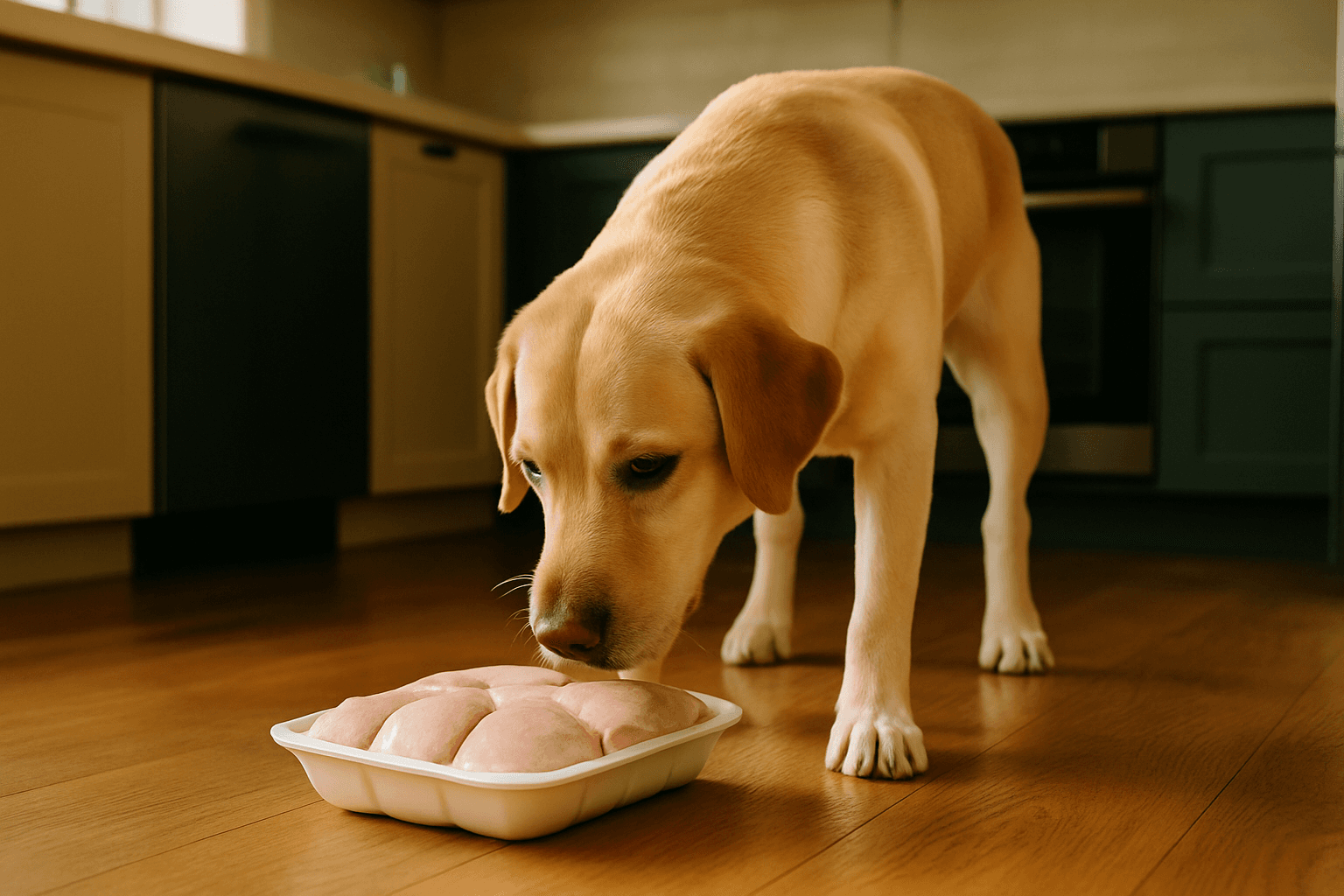
Take a breath -- this is usually not an emergency. Dogs have been eating raw meat for thousands of years. Their digestive systems are built for it -- short gut, highly acidic stomach, strong enzymes. The risk of Salmonella or Campylobacter infection exists but is low. Most dogs that eat raw chicken will be completely fine. Here's what to actually watch for.
What to Do Right Now
- Don't panic. Raw chicken is not toxic to dogs. This is not the same as chocolate or grapes.
- Note what they ate. Was it boneless meat? Meat with bones? A whole raw chicken? The meat itself is the least concerning part.
- If they ate bones: Raw chicken bones are soft and flexible, so they are much less dangerous than cooked bones. Still, watch for choking, gagging, or pawing at the mouth.
- Offer water but do not force your dog to eat or drink.
- Monitor for 24 to 48 hours for any signs of digestive upset: vomiting, diarrhea, lethargy, or loss of appetite.
- Wash your hands and clean any surfaces the raw chicken touched. The bigger health risk is to you, not your dog.
Why Raw Chicken Is Usually Fine for Dogs
Dogs are natural scavengers and carnivores. Their digestive system is fundamentally different from ours:
- Stomach acid pH of 1 to 2 -- strong enough to dissolve bone and kill most bacteria
- Short digestive tract -- food passes through in 4 to 8 hours, giving bacteria little time to colonize
- Natural bacterial resistance -- dogs carry and tolerate bacteria that would make humans very sick
Thousands of dog owners feed raw chicken (including bones) as part of a raw diet every single day. The raw feeding community considers chicken one of the safest raw proteins to start with. The real danger people confuse this with is cooked chicken bones -- which splinter into sharp fragments. Raw bones do not have this problem.
The Real Risks (and How Small They Are)
While raw chicken is generally safe for dogs, there are some legitimate risks to be aware of:
- Salmonella: Dogs can contract Salmonella, but their natural resistance is high. Healthy adult dogs rarely show symptoms. Puppies, seniors, and immunocompromised dogs are at higher risk.
- Campylobacter: Another bacteria found in raw poultry. Same low-risk profile as Salmonella in healthy adult dogs.
- Bones (minor risk): Raw chicken bones are soft and flexible, but a very small dog eating a very large bone could still have issues. Most raw-fed dogs handle chicken bones without any problem.
- Risk to humans: Your dog can shed bacteria in their stool for days after eating raw chicken. This is a bigger concern for your household than for your dog.
When to Call the Vet
Most dogs will not need a vet visit after eating raw chicken. But contact your vet if you notice these signs within 24 to 48 hours:
- Vomiting that does not stop after one or two episodes
- Bloody or very watery diarrhea
- Fever (warm ears, dry nose, lethargy combined with loss of appetite)
- Abdominal bloating or obvious pain
- Straining to defecate or inability to pass stool (possible bone obstruction)
- Choking, gagging, or pawing at the mouth
- Complete refusal to eat or drink for more than 12 hours
Also call the vet if your dog is a young puppy, a senior, or has a known immune system condition -- these dogs are more vulnerable to foodborne bacteria.
Check any food instantly with our toxic food checker.
Answer a few quick questions to find out if you need the vet right now.