
My Dog Ate Chocolate
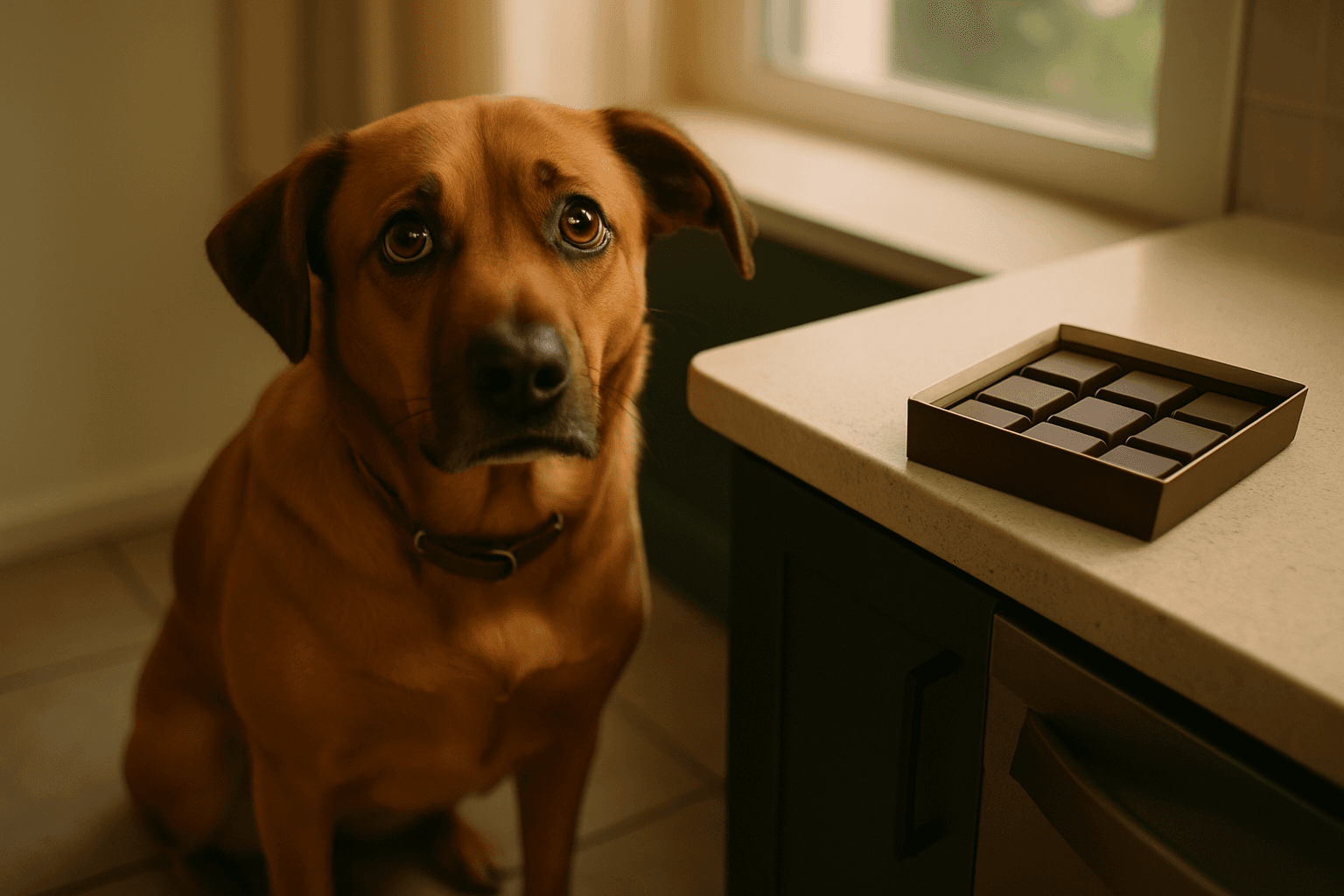
Yes, chocolate is toxic to dogs. The danger depends on the type of chocolate, how much they ate, and your dog's weight. Dark chocolate and baking chocolate are the most dangerous. Milk chocolate is moderately risky. White chocolate is the least concern. Here's what to do right now.
What to Do Right Now
- Stay calm. Panicking does not help your dog.
- Figure out what they ate. What type of chocolate? How much? Check the wrapper or package for weight and cocoa percentage.
- Estimate your dog's weight. You will need this when you call the vet.
- Call your vet or ASPCA Animal Poison Control at (888) 426-4435. There is a $75 consultation fee for ASPCA poison control, but they are available 24/7.
- Do NOT induce vomiting unless a veterinarian specifically tells you to.
- Watch for symptoms: vomiting, diarrhea, rapid heartbeat, restlessness, tremors, or seizures.
Why Chocolate Is Dangerous for Dogs
Chocolate contains theobromine, a compound similar to caffeine. Humans metabolize theobromine quickly, but dogs process it much more slowly -- allowing it to build up to toxic levels in their system. Theobromine stimulates the heart and central nervous system. At high doses, it can cause heart failure, seizures, and death.
The darker and more bitter the chocolate, the more theobromine it contains. Baking chocolate has roughly 130-450mg of theobromine per ounce. Dark chocolate has 135-200mg per ounce. Milk chocolate has 44-64mg per ounce. White chocolate has less than 1mg per ounce.
How Much Chocolate Is Too Much?
The general toxic threshold is about 20mg of theobromine per pound of body weight for mild symptoms, and 40-50mg per pound for severe toxicity. Here is a rough guide:
| Chocolate Type | Dangerous Amount (20-lb dog) | Dangerous Amount (50-lb dog) |
|---|---|---|
| Baking chocolate | 1 oz | 2.5 oz |
| Dark chocolate | 2-3 oz | 5-7 oz |
| Milk chocolate | 7-8 oz | 16-20 oz |
| White chocolate | Unlikely to cause theobromine toxicity | Unlikely to cause theobromine toxicity |
When to Call the Vet
Call your vet or an emergency animal hospital immediately if your dog shows any of these signs:
- Vomiting or diarrhea that does not stop
- Rapid or irregular heartbeat
- Restlessness, hyperactivity, or panting
- Muscle tremors or twitching
- Seizures or collapse
- Dark or bloody stool
Even if your dog seems fine, call your vet if they ate any amount of dark or baking chocolate. Symptoms can be delayed by several hours.
Check any food instantly with our toxic food checker.
Answer a few quick questions to find out if you need the vet right now.