My Dog Ate a Sock
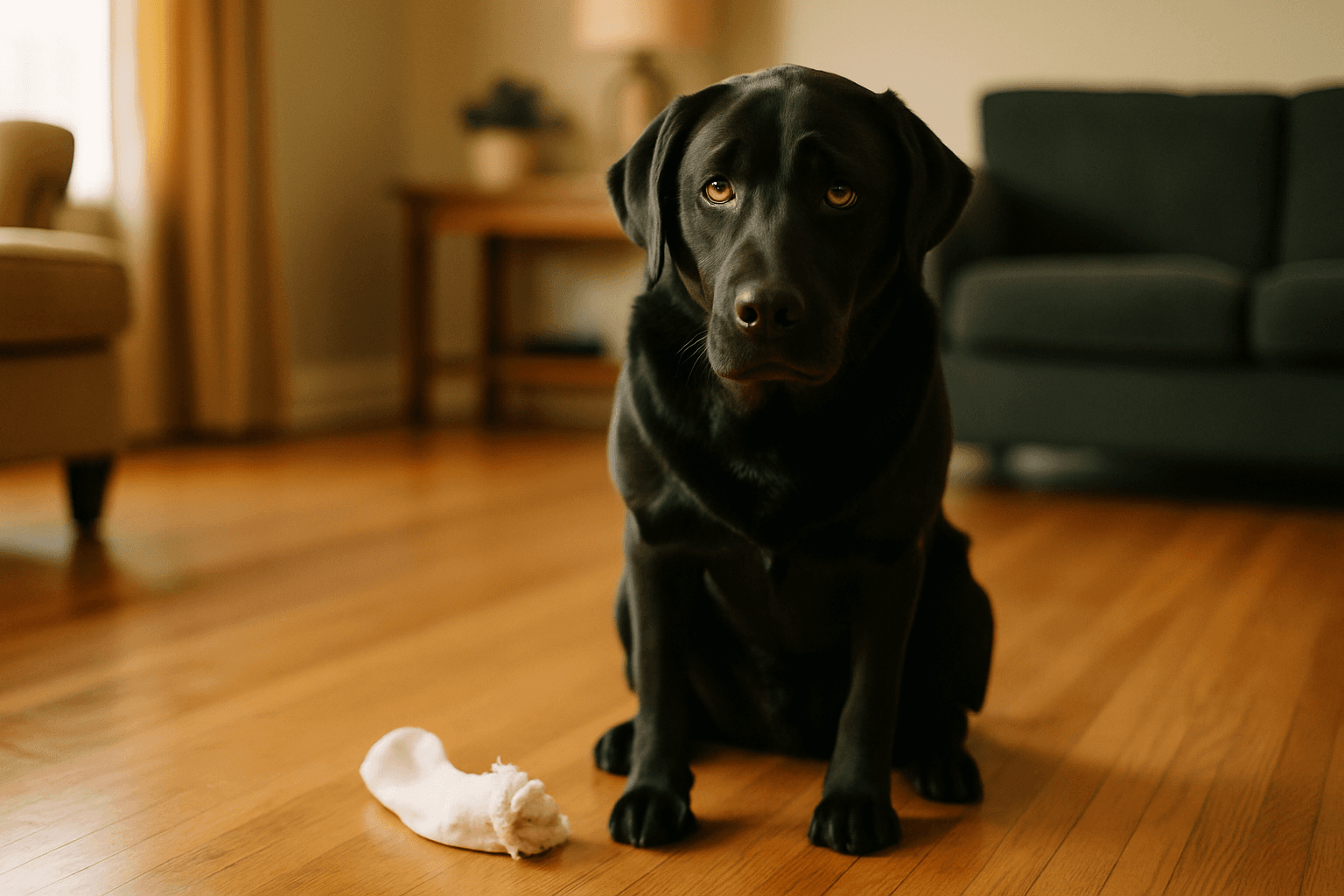
Socks are one of the most common foreign objects dogs swallow, and they do not digest. A swallowed sock can pass through a large dog without issues, but in small and medium dogs it can cause a life-threatening intestinal blockage. Do NOT induce vomiting -- a sock can get stuck in the esophagus on the way back up. Here's what to do right now.
What to Do Right Now
- Do NOT induce vomiting. A sock can lodge in the throat or esophagus and create a choking emergency.
- Note the time. When did your dog swallow the sock? This helps your vet decide the best approach.
- Consider your dog's size. A 70-pound Lab has a much better chance of passing a sock than a 15-pound terrier.
- Call your vet. Describe the size of the sock, the size of your dog, and how long ago it happened. If it was within the last 1 to 2 hours, the vet may be able to retrieve it with an endoscope.
- Monitor closely for 48 hours. Watch for vomiting, loss of appetite, straining to poop, or abdominal pain.
- Check every bowel movement. You are looking for the sock to pass. If it does, the crisis is over.
Why Socks Are Dangerous for Dogs
Socks are made of fabric that does not break down in stomach acid. Unlike food, a sock stays intact as it moves through the digestive tract. If the sock is small enough relative to your dog, it may pass through the stomach and intestines without getting stuck. But if it gets caught -- usually at a bend in the small intestine -- it creates a blockage.
An intestinal blockage prevents food and water from passing through. It also cuts off blood flow to the affected section of intestine. Without treatment, the intestinal wall can die, perforate, and leak bacteria into the abdomen, causing peritonitis and sepsis. This is a surgical emergency.
When Will the Sock Pass?
If the sock is going to pass on its own, it usually happens within 24 to 48 hours. Here is a general guide based on dog size:
| Dog Size | Likelihood of Passing | Recommendation |
|---|---|---|
| Large dog (50+ lbs) + small sock | High | Monitor at home, call vet if symptoms appear |
| Large dog (50+ lbs) + adult sock | Moderate | Call vet for guidance, monitor closely |
| Medium dog (25-50 lbs) | Lower | Call vet -- X-ray may be recommended |
| Small dog (under 25 lbs) | Low | Call vet immediately -- high blockage risk |
When to Call the Vet
Go to your vet or an emergency animal hospital immediately if you see any of these signs:
- Repeated vomiting, especially after eating or drinking
- Complete loss of appetite for more than 12 hours
- No bowel movement for 24+ hours
- Abdominal bloating, pain, or tenderness
- Whimpering, restlessness, or inability to get comfortable
- Lethargy or sudden weakness
- Bloody stool or black tarry stool
If your dog is small (under 25 pounds), call your vet right away even if no symptoms are showing yet. Small dogs are at the highest risk for blockage.
Check any food instantly with our toxic food checker.
Answer a few quick questions to find out if you need the vet right now.