My Dog Ate a Small Piece of Onion
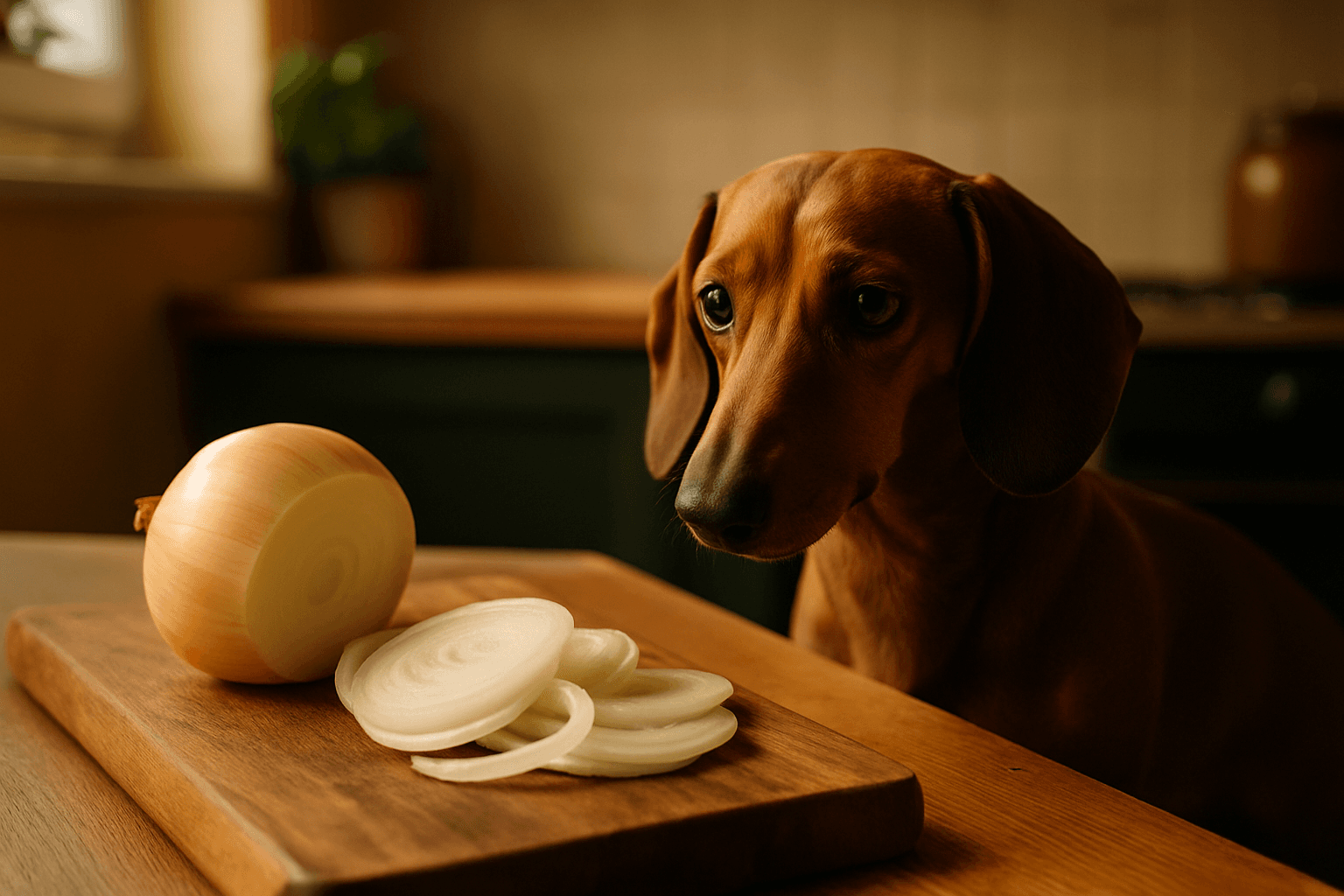
A small piece of onion is unlikely to be dangerous for a medium or large dog, but it depends on the math. Onion toxicity kicks in at roughly 0.5% of your dog's body weight. For a 70-pound dog, that is about 5 ounces of onion. For a 10-pound Chihuahua, it is only 0.8 ounces -- barely a tablespoon. A tiny piece that is harmless to a Lab could be a real problem for a toy breed. Here's what to do right now.
What to Do Right Now
- Estimate how much onion your dog ate. A sliver off a cutting board? A chunk from a dropped burger? A whole ring?
- Know your dog's weight. The toxic threshold is 0.5% of body weight, so size matters enormously.
- Do the math. A 50-pound dog would need to eat about 4 ounces (a quarter of a medium onion) to reach the toxic threshold. A truly small piece is likely below that for most dogs.
- Call your vet if you are unsure. Especially if your dog is under 20 pounds or ate more than a small nibble.
- Monitor for 3 to 5 days. Onion toxicity has a delayed onset -- red blood cell damage takes days to develop, not hours.
- Watch for pale gums, weakness, and dark urine. These are signs of anemia from red blood cell destruction.
Why Onions Are Dangerous for Dogs
Onions contain n-propyl disulfide, a compound that damages the hemoglobin inside your dog's red blood cells. This damage creates structures called Heinz bodies on the surface of the cells, which the dog's immune system recognizes as abnormal. The spleen then destroys these damaged red blood cells faster than the body can replace them.
When enough red blood cells are destroyed, the dog develops hemolytic anemia -- they literally do not have enough red blood cells to carry oxygen to their organs. This is why symptoms include weakness, rapid breathing, and pale gums. The damage is cumulative, which means small amounts of onion eaten repeatedly over time can be just as dangerous as a single large dose.
All members of the Allium family contain the same class of toxins: onions, garlic, leeks, chives, shallots, and scallions. Garlic is actually 3 to 5 times more potent than onions by weight, though the small size of garlic cloves often means the total dose is lower.
How Much Is Too Much?
The general toxic threshold is 0.5% of body weight. Here is what that looks like for different dog sizes:
| Dog Weight | Toxic Threshold | Equivalent |
|---|---|---|
| 5 lbs (Yorkie) | 0.4 oz | About 1 teaspoon of chopped onion |
| 10 lbs (Chihuahua) | 0.8 oz | Less than 1 tablespoon of chopped onion |
| 25 lbs (Beagle) | 2.0 oz | About 2 tablespoons of chopped onion |
| 50 lbs (Pit Bull) | 4.0 oz | About a quarter of a medium onion |
| 70 lbs (Lab) | 5.6 oz | About a third of a medium onion |
| 100 lbs (Great Dane) | 8.0 oz | About half a medium onion |
Remember: onion powder is much more concentrated than fresh onion. A small amount of onion powder in seasoning is proportionally more dangerous than the same volume of fresh onion.
When to Call the Vet
Contact your vet if any of the following apply. Remember that symptoms of onion toxicity can take 3 to 5 days to appear:
- Your dog is a small breed (under 20 pounds) and ate any amount of onion
- Your dog ate more than a tiny piece -- even for a large dog
- Pale or white gums (check by lifting the lip)
- Weakness, lethargy, or reluctance to move
- Dark reddish-brown urine (sign of red blood cell breakdown)
- Rapid breathing or panting at rest
- Vomiting or diarrhea within the first 24 hours
- Loss of appetite lasting more than a day
Monitor for a full 5 days. Unlike most food toxicities where symptoms appear within hours, onion damage to red blood cells is gradual. Your dog may seem perfectly fine for 2 to 3 days before anemia symptoms appear.
Check any food instantly with our toxic food checker.
Answer a few quick questions to find out if you need the vet right now.