
May 8, 2023
Are Essential Oil Diffusers Safe for Dogs? What Every Owner Needs to Know
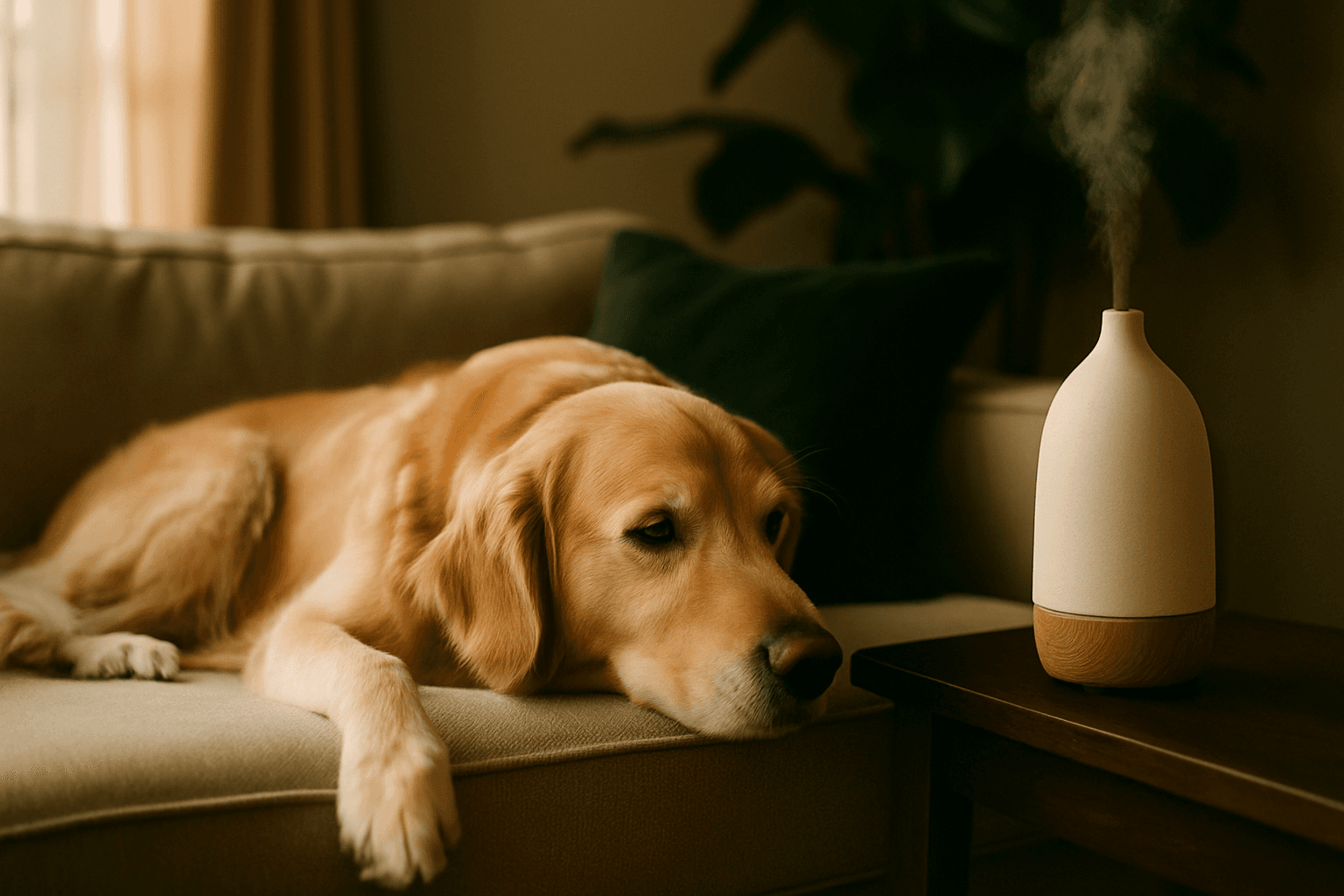
Essential oil diffusers have become a fixture in many homes, filling rooms with calming scents like lavender, eucalyptus, and peppermint. But if you share your home with a dog, you need to understand the risks before you plug one in. Dogs have a sense of smell roughly 10,000 to 100,000 times more sensitive than ours, and their livers process certain compounds differently -- making some essential oils genuinely dangerous to canines.
This guide covers which essential oils are toxic to dogs, which types of diffusers pose the greatest risk, and how to use aromatherapy safely if you choose to keep a diffuser in a pet-friendly home.
How Essential Oil Diffusers Work
Before assessing safety, it helps to understand the different diffuser types and how they disperse oil into the air.
Ultrasonic Diffusers
These use water and ultrasonic vibrations to create a fine mist carrying essential oil particles. They release a diluted concentration into the air and also add humidity. Because the oil is dispersed in water vapor, the concentration per breath is relatively low -- but it still enters your dog's respiratory system.
Nebulizing Diffusers
Nebulizers use pressurized air to atomize pure essential oil into micro-droplets without water. This delivers a much higher concentration of oil into the air. Nebulizing diffusers pose the greatest risk to dogs because the airborne oil concentration is significantly stronger.
Evaporative Diffusers
A fan blows air across a pad or filter soaked in essential oil. The scent disperses as the oil evaporates. These tend to release oil more slowly but can still accumulate in enclosed spaces.
Heat Diffusers
These use gentle heat (candle warmers, electric warmers) to evaporate the oil. They deliver a lighter concentration but can alter the chemical composition of the oil through heating, which may produce unexpected compounds.
Why Essential Oils Can Be Dangerous to Dogs
Dogs are vulnerable to essential oils for several biological reasons:
- Liver metabolism: Dogs lack certain liver enzymes (specifically some cytochrome P450 enzymes) that humans use to break down and eliminate volatile organic compounds found in essential oils. This means toxic compounds can accumulate in their system.
- Respiratory sensitivity: A dog's respiratory tract is more reactive to airborne irritants. Inhaled oil particles can cause inflammation of the airways, coughing, wheezing, and in severe cases, pneumonia.
- Skin absorption: Oil droplets that settle on your dog's fur or skin can be absorbed directly or ingested when your dog grooms itself.
- Size matters: Smaller dogs are affected by lower doses. A concentration that might be tolerable for a 70-pound Labrador could be dangerous for a 10-pound Chihuahua.
Essential Oils That Are Toxic to Dogs
The following essential oils are widely recognized by veterinary toxicologists as harmful to dogs. This list is not exhaustive -- when in doubt, consult your veterinarian before diffusing any oil.
Highly Toxic Oils (Avoid Completely)
- Tea tree (melaleuca): One of the most commonly reported causes of essential oil poisoning in dogs. Even small amounts can cause vomiting, weakness, tremors, and liver damage.
- Pennyroyal: Extremely toxic. Can cause liver failure and death even in small quantities.
- Wintergreen: Contains methyl salicylate, which is essentially concentrated aspirin. Dogs cannot metabolize salicylates safely.
- Pine oil: Can cause gastrointestinal irritation, central nervous system depression, and kidney damage.
- Cinnamon: Irritates mucous membranes, can cause liver damage, and may lower blood sugar to dangerous levels.
- Citrus oils (lemon, lime, orange, grapefruit): Contain compounds called limonene and linalool that are toxic to dogs. Can cause drooling, vomiting, tremors, and skin irritation.
- Ylang ylang: Can cause difficulty breathing, weakness, and vomiting.
- Clove: Contains eugenol, which can cause liver toxicity in dogs.
- Eucalyptus: Can cause drooling, vomiting, diarrhea, and depression.
- Peppermint: In concentrated forms, can cause lethargy, vomiting, and diarrhea.
Oils Generally Considered Safer (With Caution)
Some essential oils are considered lower-risk when used in well-ventilated spaces with proper dilution. However, no essential oil is completely risk-free for dogs:
- Lavender: Generally considered one of the safer options when heavily diluted and used in a well-ventilated room.
- Chamomile: May be calming and is considered lower-risk, but should still be used sparingly.
- Frankincense: Often listed as a safer option for pets when used in moderation.
- Cedarwood: Generally tolerated in low concentrations with good ventilation.
Important: "Generally safer" does not mean "safe." Individual dogs may react differently based on breed, size, age, and pre-existing health conditions. Always start with minimal exposure and watch for any adverse reactions.
Signs of Essential Oil Poisoning in Dogs
If your dog has been exposed to a toxic essential oil -- through inhalation, skin contact, or ingestion -- watch for these symptoms:
- Drooling or excessive salivation
- Coughing, wheezing, or labored breathing
- Watery eyes or nose
- Vomiting or diarrhea
- Lethargy or weakness
- Tremors or muscle twitching
- Difficulty walking or loss of coordination (ataxia)
- Pawing at the face or mouth
- Redness or irritation on the skin
- In severe cases: collapse, seizures, or loss of consciousness
If you notice any of these symptoms, move your dog to fresh air immediately, and contact your veterinarian or the ASPCA Animal Poison Control Center at (888) 426-4435.
How to Use a Diffuser Safely Around Dogs
If you want to continue using a diffuser in a home with dogs, follow these precautions:
1. Choose the Right Diffuser Type
Ultrasonic diffusers with water dilution are the lowest-risk option. Avoid nebulizing diffusers entirely in homes with dogs -- they release concentrations that are too high for safe pet exposure.
2. Ventilate the Room
Never diffuse in a closed room. Keep doors open so your dog can leave the area if the scent bothers them. Dogs should always have the option to move to oil-free air.
3. Limit Diffusion Time
Run your diffuser for no more than 30 to 60 minutes at a time, and take breaks of at least an hour between sessions. Continuous diffusion increases the concentration of oil particles in the air and in your dog's system.
4. Keep the Diffuser Out of Reach
Place diffusers on high shelves or in areas your dog cannot access. Spilled diffuser water containing essential oils can cause skin burns or gastrointestinal distress if licked.
5. Use Only Pet-Safe Oils
Stick to oils on the "generally safer" list, and always use the minimum number of drops recommended. More oil does not mean more benefit -- it means more risk.
6. Never Apply Oils Directly to Your Dog
Do not put essential oils on your dog's skin, collar, or bedding unless specifically directed by a veterinarian. Topical application bypasses the dilution that diffusion provides and can cause burns, allergic reactions, or systemic toxicity.
7. Watch for Behavioral Changes
If your dog leaves the room when the diffuser is on, sneezes, paws at their nose, or seems agitated, turn the diffuser off. These are signs of discomfort or irritation.
Dogs at Higher Risk
Some dogs are more vulnerable to essential oil exposure than others:
- Puppies: Their developing organs are less efficient at processing foreign compounds.
- Senior dogs: Aging liver and kidney function reduces their ability to clear toxins.
- Brachycephalic breeds (flat-faced): Bulldogs, Pugs, French Bulldogs, and similar breeds already have compromised airways. Airborne irritants can cause serious respiratory distress.
- Dogs with liver disease: Any pre-existing liver condition reduces the dog's ability to metabolize essential oil compounds.
- Dogs with asthma or allergies: Airborne particles can trigger or worsen respiratory conditions.
What About Essential Oil Products Marketed for Pets?
You may see essential oil products marketed specifically for dogs -- calming sprays, flea repellents, or wellness blends. Approach these with caution. The pet product industry is not regulated the same way veterinary pharmaceuticals are. A product labeled "pet safe" has not necessarily been tested or approved by any veterinary authority.
If you want to use essential oils therapeutically for your dog (for example, for anxiety or skin conditions), work with a veterinarian who has training in integrative or holistic medicine. They can recommend safe products and appropriate dosages for your specific dog.
Alternatives to Essential Oil Diffusers
If you want a pleasant-smelling home without the risk to your dog, consider these alternatives:
- Beeswax candles: Unscented or lightly scented beeswax candles purify the air without releasing harmful compounds (keep them out of your dog's reach).
- Simmer pots: Gently simmer water with dog-safe herbs like rosemary or fresh mint on the stove for a natural, mild fragrance.
- Open windows: Fresh air is the simplest and safest way to keep your home smelling clean.
- Activated charcoal bags: These absorb odors without adding any chemicals to the air.
- Pet-safe air fresheners: Look for products specifically formulated to be non-toxic to pets, and verify the claim with your vet.
Frequently Asked Questions
Can I diffuse lavender around my dog?
Lavender is considered one of the lower-risk essential oils for dogs when used in a well-ventilated room with an ultrasonic diffuser. However, monitor your dog for any signs of irritation and limit diffusion time to 30-60 minutes.
What should I do if my dog ingests essential oil?
Contact your veterinarian or the ASPCA Animal Poison Control Center (888-426-4435) immediately. Do not induce vomiting unless instructed to do so by a professional, as some oils can cause additional damage if brought back up.
Are essential oil diffusers safe around puppies?
Puppies are at higher risk than adult dogs due to their developing organs and smaller body size. It is safest to avoid diffusing essential oils in rooms where puppies spend time.
Can the smell of essential oils alone hurt my dog?
Yes. Inhalation is one of the primary routes of exposure. The volatile organic compounds in essential oil vapor enter your dog's lungs and bloodstream. Even if your dog does not directly contact the oil, breathing it in can cause harm -- especially with toxic oils or in poorly ventilated spaces.
Is it safe to use essential oils for flea prevention on dogs?
Some essential oils (like cedarwood or lemongrass) are marketed as natural flea repellents, but their effectiveness is limited compared to veterinary flea treatments. More importantly, applying concentrated essential oils directly to your dog's skin carries real risk. Talk to your vet about proven flea prevention methods.
The Bottom Line
Essential oil diffusers can be used in homes with dogs, but only with significant precautions. Stick to lower-risk oils, use ultrasonic diffusers with water dilution, keep rooms well-ventilated, limit diffusion time, and always give your dog the freedom to leave the scented area. When in doubt, skip the diffuser entirely -- your dog's health is more important than a pleasant scent.
The DogResources directory lists Canadian kennels by breed. New submissions are held for approval before publication. Run a kennel? List it here.