What Is the Hardest Command to Teach a Dog?
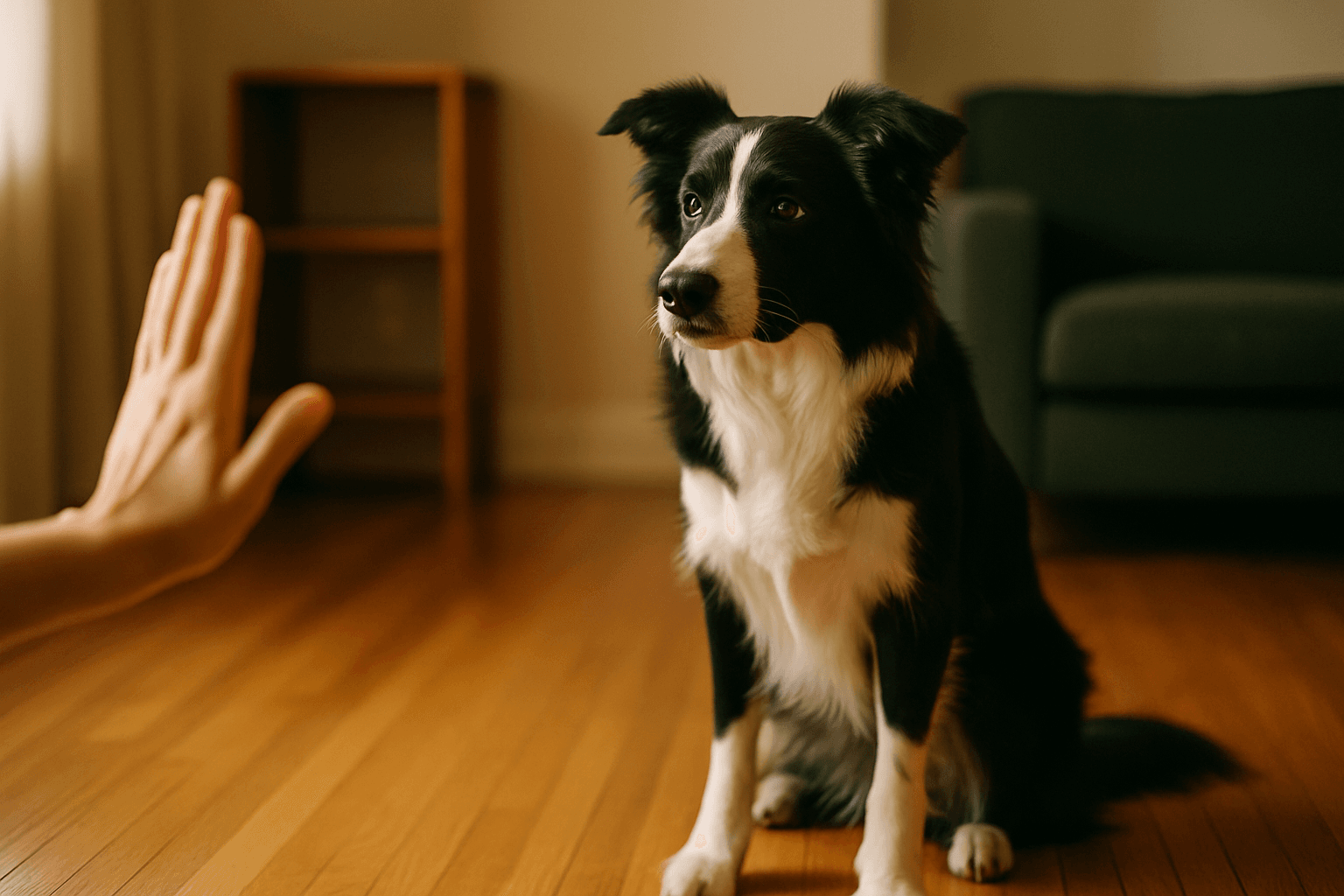
"Leave it" is widely considered the hardest basic command to teach a dog -- because it requires impulse control, not just a learned behavior. Sitting, lying down, and shaking are actions a dog performs. "Leave it" asks a dog to NOT do something they desperately want to do. That is a fundamentally different cognitive challenge. But "leave it" is just the beginning. Here are the hardest commands ranked and how to actually teach them.
The 5 Hardest Commands to Teach
1. "Leave It" -- Impulse Control
Your dog sees a piece of chicken on the ground. Every fiber of their being says "eat it." "Leave it" asks them to override 15,000 years of scavenging instinct and trust that you have something better. This is not obedience -- it is self-control, and it is the foundation of every other advanced command.
How to train it: Start with a treat in your closed fist. Let the dog sniff, paw, and lick. The moment they back away or look at you, mark it ("yes!") and reward with a DIFFERENT, better treat from your other hand. Never reward with the forbidden item -- that teaches them that patience gets them the thing they wanted, which defeats the purpose.
2. Reliable Recall Off-Leash
Recall in your living room is easy. Recall at the dog park when a squirrel runs by and three other dogs are playing -- that is the real test. Off-leash recall requires your dog to choose you over every competing stimulus in the environment. It is arguably the most important command for safety and the hardest to make truly reliable.
How to train it: Use a long line (30-50 feet) for months. Never call your dog to you for something negative (bath, leaving the park, crate time). Make coming to you the best thing that happens all day -- jackpot treats, excited praise, play. Practice in gradually more distracting environments. And never let your dog off-leash until recall is rock solid on the long line.
3. "Place" with Duration and Distractions
"Place" means go to a specific spot (a bed, mat, or platform) and stay there until released. Teaching the initial behavior is straightforward. The hard part is building duration (30+ minutes) while distractions happen -- doorbells ring, people walk by, food is being prepared. This requires the dog to maintain self-control over an extended period, which is exhausting for them.
How to train it: Start with 5 seconds on place, reward, release. Gradually increase time before the reward. Add distractions slowly -- first movement, then noise, then other people, then food nearby. If the dog breaks, calmly return them to place without a reward. No punishment. Just reset and try with less duration or fewer distractions.
4. Heel -- Sustained Focused Walking
Heel is not just "do not pull." A true heel means the dog walks at your side, matches your pace, turns when you turn, stops when you stop, and maintains attention on you -- all while the world is full of smells, sounds, and other dogs. It requires sustained focus, which is mentally draining for dogs.
How to train it: Start indoors with zero distractions. Reward frequently for being in the correct position. Use a marker word the instant they are in position. Keep sessions short (2-3 minutes for puppies, 5-10 minutes for adults). Gradually move to more distracting environments. Most dogs can maintain a formal heel for about 10-15 minutes before they need a break to sniff and explore.
5. "Go to Bed" from a Distance
Sending a dog to a specific location from across the room (or from another room) requires the dog to understand a verbal cue without physical guidance, move away from you (which feels counterintuitive to pack animals), and go to a precise location. It combines spatial awareness, independence, and obedience -- all at once.
How to train it: Start right next to the bed, luring them onto it. Gradually increase your distance from the bed when you give the command. Use a pointing gesture at first, then fade it to just the verbal cue. Reward heavily when they get it right from a distance. This command can take weeks to months to become reliable at full distance.
Why Some Commands Are Harder Than Others
The difficulty of a command comes down to what it asks of the dog's brain:
- Learned behaviors (easy): Sit, down, shake, spin. The dog performs an action. Straightforward stimulus-response.
- Impulse control (hard): Leave it, wait, stay. The dog must NOT do something. This requires the prefrontal cortex -- the same part of the brain humans use for self-control.
- Sustained attention (hardest): Heel, place with duration, extended stays. The dog must maintain focus over time while resisting distractions. This is cognitively exhausting.
The Easiest Commands for Contrast
Not every command is a battle. These are the ones most dogs pick up quickly:
- Sit. Most dogs learn it in one session. It is a natural position that is easy to lure.
- Down. Slightly harder than sit but still a natural resting position. Lure from sit with a treat moving toward the ground.
- Shake / Paw. Dogs naturally paw at things. Capturing this behavior and putting it on cue is fast and fun.
- Touch (nose to hand). Simple targeting behavior that most dogs love because it always results in a treat.
The Secret to Hard Commands: High-Value Treats
For easy commands, kibble works fine. For hard commands -- the ones that require impulse control or sustained attention -- you need rewards that compete with the environment. That means real chicken, cheese, freeze-dried liver, or whatever makes your dog lose their mind. The reward must be worth more than the distraction. If you are asking your dog to ignore a squirrel, a piece of dry kibble is not going to cut it.
Find a breed that matches your training experience and patience level.