
What Calms a Dog Down Immediately?
When your dog is anxious, panicked, or overstimulated, you need solutions that work right now -- not next week. Whether it is a thunderstorm, fireworks, a vet visit, or just a dog that cannot settle, these are proven techniques that can bring your dog's stress level down fast. Some are instant. Others take a few minutes. All of them are backed by animal behavior science.
1. Calm Your Own Energy First
This is the most important and most overlooked technique. Dogs are emotional mirrors -- they read your body language, tone of voice, breathing rate, and tension level constantly. If you are panicking about the thunderstorm, your dog will panic harder. If you are frustrated that they will not settle, your frustration becomes their anxiety.
What to do: Take three slow, deep breaths. Drop your shoulders. Lower your voice to a calm, steady tone. Move slowly. Your dog will start matching your energy within minutes.
2. Pressure Wraps (Thundershirt)
Pressure wraps apply gentle, constant pressure around your dog's torso -- similar to swaddling a baby. This activates the parasympathetic nervous system and triggers a calming reflex. A 2014 study in the Journal of Veterinary Behavior found that 89% of owners reported improvement in their dog's anxiety symptoms with a pressure wrap.
Best for: Thunderstorms, fireworks, travel anxiety, separation anxiety. Put it on before the stressful event starts for best results.
3. Classical Music or Soft Rock
This is not a gimmick. Research from the University of Glasgow (2017) measured heart rate variability and behavior in shelter dogs exposed to different music genres. Soft rock and reggae produced the most significant calming effect, followed by classical music. Dogs spent more time lying down, barked less, and had lower heart rates.
What to do: Play calming music at a low-to-moderate volume. There are playlists specifically designed for dogs on most streaming platforms. Start playing it before the stressful event if possible so the dog associates the music with calm.
4. Lick Mats and Frozen Kongs
Repetitive licking releases endorphins -- the brain's natural feel-good chemicals. A lick mat smeared with peanut butter, yogurt, or pumpkin puree gives your dog something to focus on while simultaneously triggering a physiological calming response. Frozen Kongs work the same way and last longer.
Pro tip: Prepare several frozen Kongs in advance and keep them in the freezer. When a stressful situation hits, you have an instant calming tool ready to go.
5. Exercise Before the Stressful Event
A tired dog is a calmer dog. If you know a stressful event is coming -- a thunderstorm in the forecast, guests arriving, a vet appointment -- give your dog a solid exercise session beforehand. A 30-minute walk, a game of fetch, or a training session burns off excess energy and makes it much easier for your dog to settle.
Important: This works best as prevention, not treatment. If your dog is already in a panicked state, forcing exercise can increase arousal rather than reduce it.
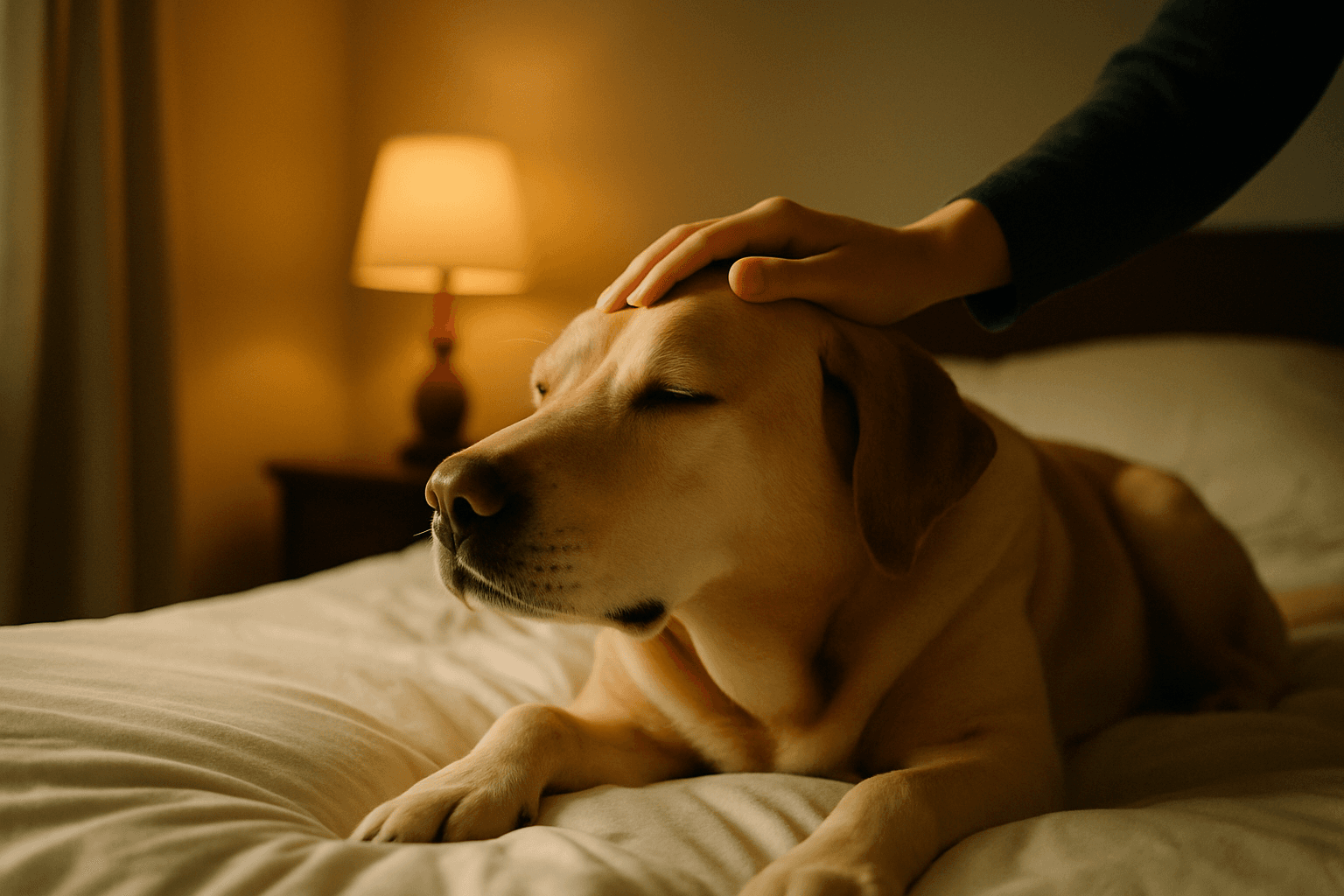
6. Massage and Touch
Slow, gentle massage -- especially along the ears, chest, and shoulders -- can lower a dog's heart rate and reduce cortisol levels. The Tellington TTouch method, developed by animal behaviorist Linda Tellington-Jones, uses specific circular touches that have been shown to reduce anxiety and reactivity in dogs.
What to do: Use slow, firm strokes along your dog's body. Gently rub the base of their ears (this area is packed with nerve endings that trigger relaxation). Watch their body language -- if they lean in, they are enjoying it. If they pull away, respect that.
7. A Safe Space or Crate
Many dogs naturally seek out small, enclosed spaces when they are stressed -- under the bed, in a closet, behind the couch. A crate (with the door open) draped with a blanket creates a den-like environment that makes anxious dogs feel protected. Do not force your dog into the crate during a panic -- let them choose it.
Setup: Place the crate in a quiet area of the house. Add a comfortable bed and a worn piece of your clothing for scent comfort. Keep the door open so they never feel trapped.
8. DAP (Dog Appeasing Pheromone) Diffuser
DAP products (sold under the brand name Adaptil) release a synthetic version of the pheromone that nursing mother dogs produce to comfort their puppies. It comes in plug-in diffusers, sprays, and collars. Multiple studies have shown that DAP reduces stress behaviors in dogs during thunderstorms, fireworks, travel, and vet visits.
Best for: Ongoing anxiety or predictable stressors. Plug in the diffuser in the room where your dog spends the most time. For travel, spray the car or crate 15 minutes before the trip.
9. Structured "Place" Training
Teaching your dog a solid "place" command -- go to your bed and stay there -- gives them a default behavior when they are overwhelmed. Instead of pacing, whining, or destructing, they have a job: go to their spot and settle. This redirects anxious energy into a behavior they have been rewarded for.
How to build it: Start in calm moments. Reward your dog for going to their bed and lying down. Gradually increase the duration and add distractions. Once it is solid, use it during mildly stressful situations and work up from there.
10. Calming Supplements
For dogs with chronic or severe anxiety, supplements can take the edge off. Common options include:
- Melatonin -- helps with noise phobias and sleep. Generally safe at 1-6mg depending on weight.
- L-Theanine -- an amino acid found in green tea that promotes relaxation without sedation.
- CBD oil -- some studies show promise for anxiety in dogs, but quality varies widely. Choose a product specifically formulated for pets.
- Zylkene -- a casein-based supplement derived from milk protein that has calming properties.
Always consult your vet before giving any supplement, especially if your dog is on other medications.
What NOT to Do
These common reactions make anxiety worse, not better:
- Do not punish anxiety. Yelling at a dog for pacing, whining, or shaking during a storm will only make them more afraid -- now they are scared of the storm AND of you.
- Do not force exposure. Forcing a fearful dog to "face their fears" (flooding) without professional guidance usually makes the phobia worse. Desensitization must be gradual and controlled.
- Do not ignore severe anxiety. If your dog is destroying things, injuring themselves, or unable to function during stressful events, this is a veterinary issue. Talk to your vet about behavior modification and, if needed, medication.
Get the right dosage for your dog's weight before you give anything.