
How Long Does 1 Hour Feel to a Dog?
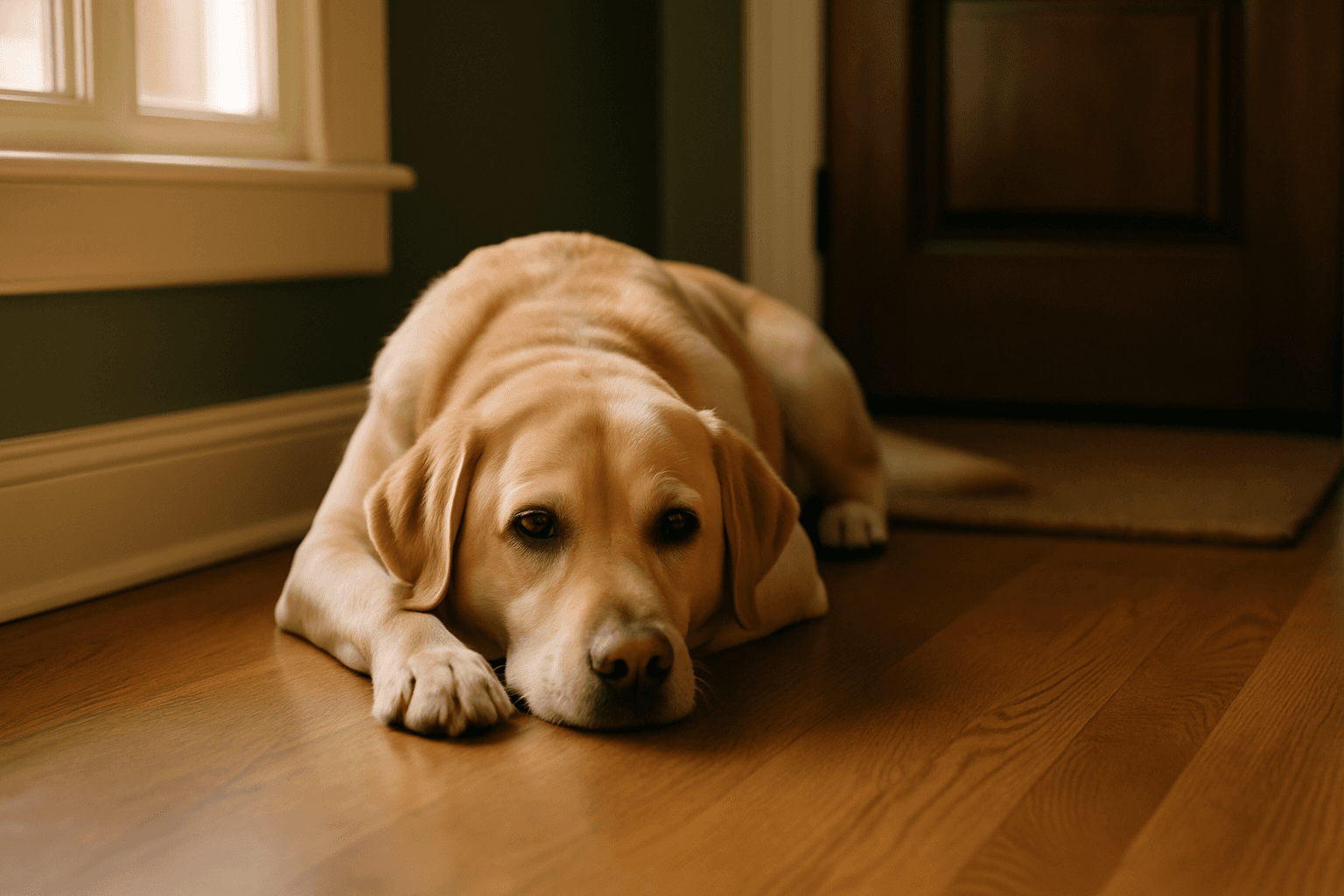
Dogs do not experience time the way humans do -- they have no concept of "one hour." Instead, dogs perceive the passage of time through routines, scent decay, light changes, and internal biological rhythms. The popular idea that 1 human hour equals 7 "dog hours" is a myth with no scientific basis. But the real answer is far more interesting than a simple ratio.
The 7:1 Ratio Is a Myth
The idea that dogs experience time seven times faster than humans comes from the old "dog years" lifespan calculation (1 human year = 7 dog years). But lifespan and time perception are completely different things. There is no neuroscience research supporting a 7:1 time ratio. It is a folk calculation that got applied where it does not belong.
What we actually know is this: dogs live in the present far more than humans do. They do not ruminate about the past or worry about the future the way we do. Their experience of time is rooted in what is happening right now and what patterns have come before.
How Dogs Actually Perceive Time
Scent Decay
One of the most fascinating theories is that dogs "smell" the passage of time. As your scent in the house fades throughout the day, your dog can literally sense how long you have been gone based on how much of your smell remains. Alexandra Horowitz, a canine cognition researcher at Barnard College, has suggested that dogs may even be able to "smell" when you are about to come home -- your scent reaches a predictable low point that correlates with your usual return time.
Circadian Rhythms
Dogs have powerful internal clocks driven by light cycles and hormonal fluctuations. This is why your dog knows it is dinner time with eerie precision, even on weekends when your schedule changes. They are not watching the clock -- they are feeling the time through their biology.
Routine and Pattern Recognition
Dogs are masters of routine. They learn that shoes on means walk, keys jingling means you are leaving, and the sound of a car in the driveway means you are home. Their sense of time is built on sequences of events, not abstract numbers on a clock.
What the Research Shows About Absence
A 2011 study by Therese Rehn and Linda Keeling, published in Applied Animal Behaviour Science, measured dogs' reactions to their owners returning after 30 minutes, 2 hours, and 4 hours. The key findings:
- 30 minutes vs. 2 hours: Dogs showed significantly more tail wagging, physical contact, and attentive behavior after 2 hours compared to 30 minutes.
- 2 hours vs. 4 hours: No significant difference in greeting behavior. Dogs reacted about the same way to both durations.
This suggests dogs can feel the difference between a short absence and a longer one, but their perception plateaus. After a certain point, "gone a while" and "gone a long time" feel about the same.
Flicker Fusion Rate: Why Moments Might Feel Longer
Dogs have a higher flicker fusion rate than humans -- approximately 70-80 Hz compared to our 60 Hz. This means dogs can detect changes in visual information faster than we can. Old CRT televisions that looked smooth to us appeared to flicker to dogs.
Some researchers speculate that this higher visual processing speed might make individual moments feel slightly more "detailed" or extended to dogs. It is similar to how time seems to slow down during a car accident when your brain goes into high-processing mode. But this is speculation, not confirmed science.
Separation Anxiety Is About Unpredictability, Not Duration
If your dog panics when you leave, it is not because one hour "feels like seven." Separation anxiety is driven by unpredictability -- your dog does not know if or when you are coming back. Dogs with secure attachment and consistent routines handle absences much better than dogs whose owners have erratic schedules.
The best thing you can do is make departures and arrivals low-key, establish a predictable routine, and give your dog something engaging to do while you are away. Food puzzles, frozen Kongs, and snuffle mats turn "alone time" into enrichment time.
Food puzzles and frozen treats work best when you know the right portions for your dog's size.