How Do Dogs Say I Love You?
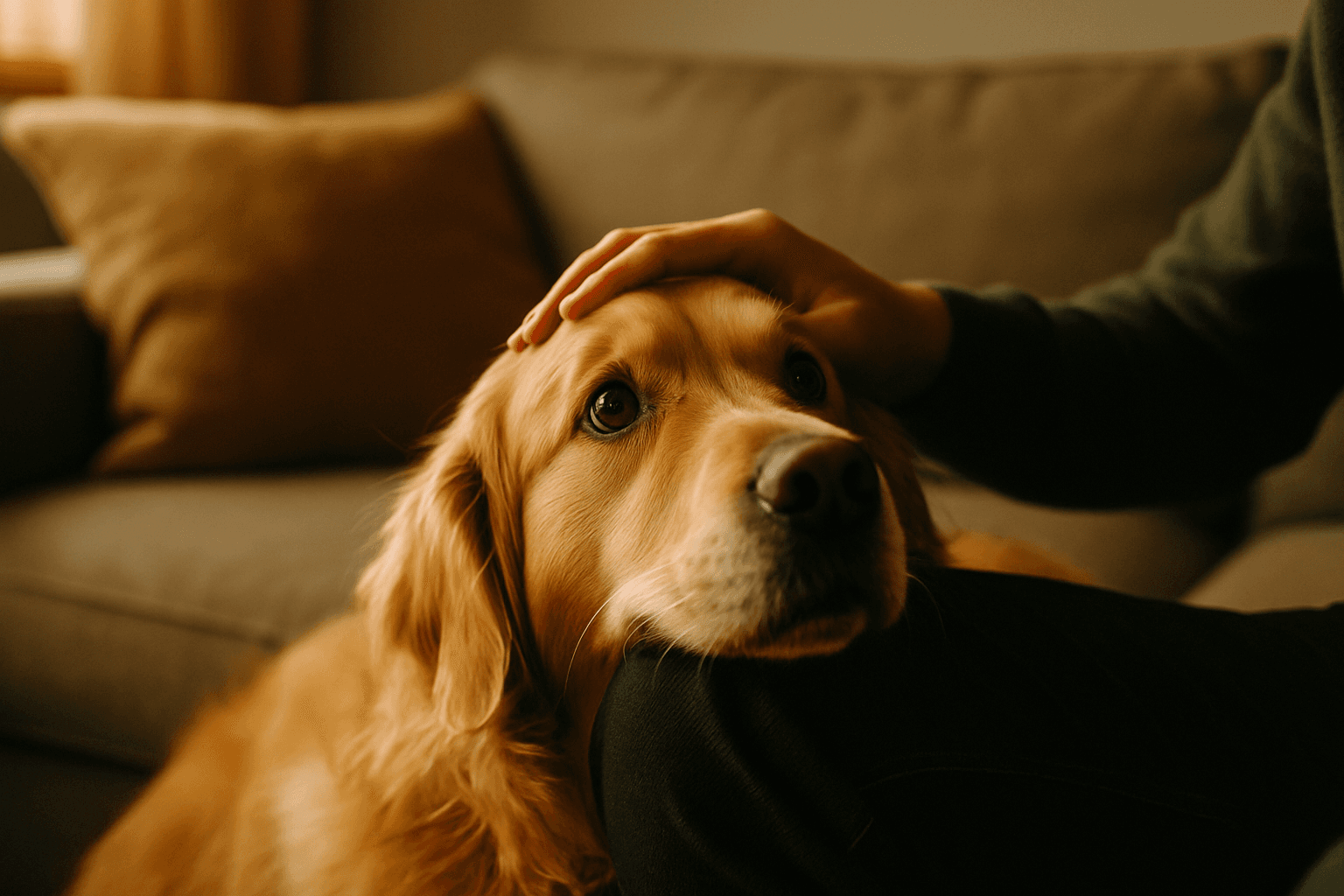
Dogs cannot say "I love you" with words, but they say it constantly through their behavior. Every lean against your leg, every soft gaze, every excited greeting at the door -- those are all declarations of love in dog language. And this is not just sentimental thinking. Science has confirmed that dogs form deep emotional bonds with their owners and experience something remarkably similar to human love. Here are the signs to look for.
The Science Behind Dog Love
In 2015, a groundbreaking study published in Science revealed that when dogs and their owners gaze into each other's eyes, both experience a surge of oxytocin -- the same hormone that bonds mothers to their babies. This was the first evidence that the human-dog bond hijacks the same neurological pathway as the parent-child bond.
Separate research at Emory University used MRI scans on awake, untrained dogs and found that their caudate nucleus -- the reward center of the brain -- activated most strongly in response to their owner's scent, even more than food in many cases. Your dog does not just like you because you feed them. They genuinely prefer you.
10 Ways Dogs Show Love
1. Soft Eye Contact
When your dog looks at you with relaxed, slightly squinted eyes and a soft expression, they are releasing oxytocin -- and so are you. This mutual gazing is one of the most powerful bonding behaviors between dogs and humans. It is the opposite of "whale eye" (wide eyes showing the whites), which signals stress or fear.
2. Leaning on You
When a dog presses their body against your legs or leans into you while sitting next to you, they are seeking physical closeness and comfort. It is the dog equivalent of a hug. Large breeds are especially known for this -- Great Danes and Mastiffs are notorious "leaners."
3. Following You Everywhere
Your dog follows you to the kitchen, the bathroom, the laundry room -- not because they think something exciting will happen, but because being near you is where they feel safest. You are their person.
4. Bringing You Toys
When your dog drops a toy at your feet or in your lap, they are sharing something they value with someone they trust. Sometimes it is a play invitation. Other times, it is a genuine gift -- their way of saying, "This is my favorite thing, and I want you to have it."
5. Sleeping Near You
In the wild, dogs only sleep next to pack members they trust completely. If your dog chooses to sleep in your room, on your bed, or pressed against your feet, they are telling you that you are family.
6. Tail Wagging (Right Side = Happy)
Not all tail wags are equal. Research shows that dogs wag more to the right when experiencing positive emotions like seeing their owner. A loose, sweeping wag with a relaxed body is a clear sign of happiness. A stiff, rapid wag with a tense posture is not the same thing -- that can signal arousal or even anxiety.
7. Licking Your Face or Hands
Licking is a natural canine behavior that starts in puppyhood -- puppies lick their mother's face as a greeting and to stimulate feeding. When your adult dog licks you, it is an affectionate greeting rooted in their earliest social instincts. It also releases endorphins that make them feel good.
8. Excited Greetings
That full-body wiggle, the spinning, the whining, the toy-grabbing frenzy when you come home -- even if you only went to check the mail -- is pure, unfiltered joy. Your dog is not performing. They genuinely missed you and they are thrilled you are back.
9. Checking In on Walks
A bonded dog will periodically look back at you during walks or off-leash play. They are checking in -- making sure you are still there, still safe, still part of the adventure. This is especially meaningful because they are choosing to focus on you over all the exciting smells and sights around them.
10. Sighing and Settling Near You
When your dog lets out a deep sigh and settles down next to you, that is contentment. They are not bored -- they are at peace. That sigh means, "I am exactly where I want to be."
How to Say "I Love You" Back
Dogs understand your love through actions, not words. Here is how to tell your dog you love them in a language they understand:
- Soft eye contact. Look at your dog with gentle eyes when they look at you. Slow blinks signal trust.
- Calm physical touch. Gentle ear rubs, chest scratches, and slow strokes along their side.
- Quality time. Walks, play sessions, training games -- your time and attention are the most valuable things you can give.
- Let them sniff on walks. Sniffing is how dogs experience the world. Letting them explore is one of the kindest things you can do.
- Learn their body language. Understanding what your dog is telling you is the deepest form of love you can offer.
Some breeds are naturally more affectionate. Find your perfect match.