What Is an Aussie Mountain Doodle?
An Aussie Mountain Doodle (often shortened to AMD) is a designer crossbreed that combines three parent breeds: the Australian Shepherd, the Bernese Mountain Dog, and the Poodle. It is sometimes called an Aussie Bernedoodle. Because it is a multi-breed mix rather than a standardized breed, you will find the definition described differently depending on where you look.
Here is the honest version. The most common way an Aussie Mountain Doodle is produced is by breeding an Aussiedoodle (Australian Shepherd crossed with Poodle) to a Bernedoodle (Bernese Mountain Dog crossed with Poodle). That pairing brings all three breeds into one litter. Some breeders, however, use the name loosely for any dog that carries Aussie, Bernese, and Poodle ancestry in some proportion, and a few use it for crosses that are heavier on one parent than another. There is no central registry enforcing a single recipe, so two dogs both sold as Aussie Mountain Doodles can have noticeably different backgrounds. When you are researching a specific litter, ask the breeder exactly which dogs were crossed rather than relying on the name alone.
Is It a Real Breed? (No, and Here Is Why That Matters)
The Aussie Mountain Doodle is not a recognized breed. It is not registered by the American Kennel Club (AKC), the United Kennel Club (UKC), or any major all-breed registry. There is no official breed standard that dictates size, coat, color, or temperament. That is not a knock against the dogs themselves. It simply means there is no governing body holding breeders to a consistent specification.
The practical takeaway is that the breeder, not a standard, determines what you get. With recognized breeds you can lean on a written standard and a long track record. With a tri-breed designer cross, the individual breeder's choices around health testing, parent selection, and generation planning carry most of the weight. That is why so much of this guide comes back to finding the right breeder.
Generations Explained: F1, F1b, F2, and Multigen
Doodle crosses are described by generation, and the labels tell you how the parents were combined. Generations matter because they influence how predictable the coat, the shedding, and the overall look turn out to be.
- F1: a first-generation cross, meaning two different parent lines bred together. F1 dogs tend to be the least predictable because traits from each side can show up in any combination.
- F1b: an F1 dog bred back to one of the founding breeds, very often the Poodle. Breeding back to Poodle usually pushes the litter toward a curlier, lower-shedding coat, though nothing is guaranteed.
- F2: two F1 dogs bred together. F2 litters can show a wide spread of coat and size, since the genetic deck gets reshuffled.
- Multigen: later generations bred from doodles on both sides over several rounds. Careful multigen breeding programs aim to lock in a consistent coat and temperament across the litter.
With a three-breed dog like the AMD, generation labels can get fuzzy, because the parents themselves are already crosses. Treat the generation as useful context, then ask the breeder directly about the expected coat and shedding for that specific pairing.
Size and Lifespan
Aussie Mountain Doodles come in different sizes, driven mostly by which size of Poodle sits in the family tree. You will commonly see a mini variety and a standard variety, and the lines between them are not strict. Adult size depends heavily on the individual parents, so the safest predictor is the actual weight of the sire and dam, not the label on the listing.
Because this is a mixed breed without a standard, published weight and lifespan figures are general estimates rather than fixed numbers. As a broad guide, many fall somewhere in the small-to-large range, and lifespan for dogs of this type is often cited in the rough range of ten to fifteen years, with smaller dogs frequently living toward the longer end. Diet, exercise, genetics, and routine veterinary care all influence the outcome more than the breed label does.
Coat, Furnishings, and the Truth About Hypoallergenic Claims
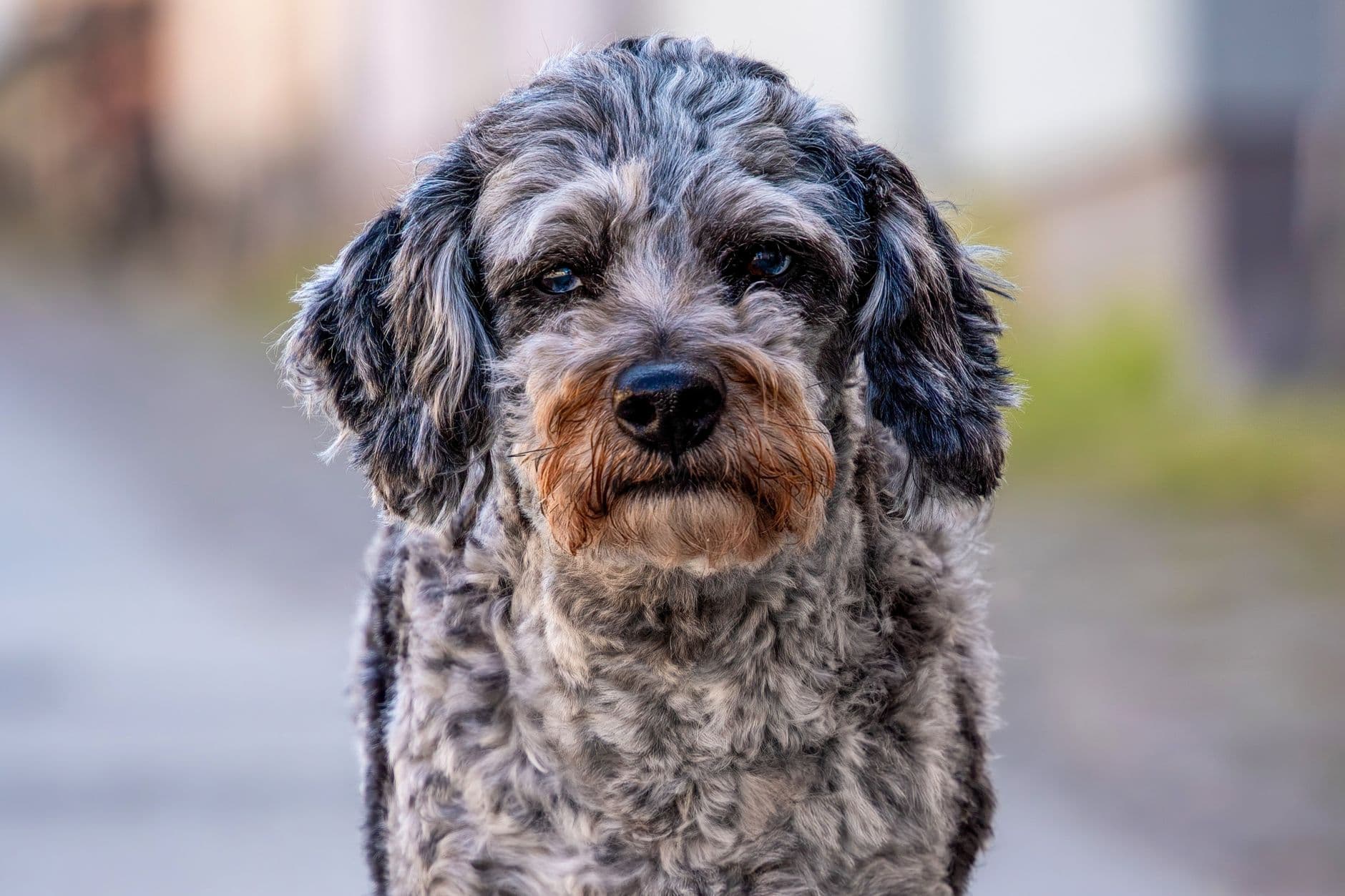
Coats vary from straight or wavy to tightly curly, and texture often tracks with how much Poodle is in the mix. A key concept here is furnishings, which refers to the longer hair on the muzzle and eyebrows that gives many doodles their soft, scruffy, teddy-bear look. Furnishings are controlled by a gene, and dogs that inherit it tend to have the classic doodle face, while dogs that do not can look more like a flat-faced Aussie or Bernese cross. This is one reason littermates can look quite different from one another.
Now the honest part about shedding. No dog is truly hypoallergenic. That is not marketing-speak, it is simply true. Curlier, furnished coats often shed less and may be easier for some allergy sufferers to live with, but allergens come from dander and saliva as well as hair, so low shedding does not equal allergy-proof. If allergies are a real concern, spend time around adult dogs from the breeder's lines before committing, and do not rely on a label. For more on how coat genetics and testing intersect, see our explainer on doodle health testing explained.
Temperament and Energy
The Aussie Mountain Doodle inherits a genuinely interesting blend of traits. The Australian Shepherd brings herding drive, focus, and a love of having a job. The Bernese Mountain Dog brings a gentle, affectionate, people-oriented nature. The Poodle brings high intelligence and trainability. Pulled together, the typical AMD is smart, eager to bond, and happiest when it has both physical exercise and mental work to do.
That herding heritage is worth taking seriously. Aussie-influenced dogs can be sensitive, alert, and prone to wanting a task, which is wonderful for an active home and frustrating for a sedentary one. Plan on daily exercise, regular training, and enrichment such as puzzle feeders, scent games, or structured walks. These dogs generally respond very well to positive, consistent training, and early socialization helps the gentle Bernese side win out over any nervy edges. They are not a low-maintenance, leave-them-alone kind of dog.
Health Considerations
Because the Aussie Mountain Doodle pulls from three breeds, its potential genetic risk surface spans all three. That cuts both ways. Crossbreeding can reduce the odds of some breed-specific problems, but it does not erase risk, and a tri-breed dog can in principle inherit issues associated with any of its founding breeds. The single best protection is a breeder who health-tests the parents.
One specific item worth understanding in plain English is MDR1, a genetic drug-sensitivity that is well known in herding breeds and reaches the AMD through the Australian Shepherd line. Dogs that carry it can react badly to certain common medications, so reputable breeders test for it, and you should tell any veterinarian about your dog's herding ancestry so they can choose medications accordingly. Beyond that, responsible breeders typically screen the parent dogs for joint, eye, cardiac, and inherited-disease concerns. In the dog world that usually means hip and joint evaluations through organizations such as OFA or PennHIP, eye and cardiac exams by veterinary specialists, and a genetic panel through a service such as Embark. The exact tests a given breeder runs should be specific to the breeds involved, so ask to see the actual results rather than accepting a general claim of health tested.
Who This Dog Suits, and Who It Does Not
An Aussie Mountain Doodle tends to be a strong fit for an active individual or family who wants a smart, affectionate, trainable companion and is genuinely ready to provide daily exercise, mental stimulation, regular grooming, and ongoing training. People who enjoy hiking, dog sports, or simply having a dog that wants to be involved in everything often love them.
They are a weaker fit for someone seeking a calm, low-effort, low-grooming dog, or for a household that is away long hours with no plan for the dog's exercise and company. The herding drive can become problem behavior without an outlet, and the coat needs steady upkeep. If you want to weigh the AMD against its closest relatives, read how it compares to a Bernedoodle or Aussiedoodle before you decide.
How to Find a Responsible Breeder
Since no standard governs this cross, the breeder is everything. Look for someone who health-tests both parents and shows you the documentation, who is transparent about exactly which dogs were bred and which generation the puppies are, who lets you meet or video-call the parents and see the living conditions, and who asks you as many questions as you ask them. Be cautious of anyone who guarantees a non-shedding or hypoallergenic dog, refuses to share testing, or always has puppies available with no waitlist. A good breeder will also take a dog back at any point in its life rather than see it end up in a shelter.
This is the short version. For a vetted starting point, see our directory of Aussie Mountain Doodle breeders.
Find a Aussie Mountain Doodle Breeder
Dedicated, single-breed breeders. Want to be listed here? Add your kennel.
Sassy Pants Pups
Cortez, CO
Family-run program raising health-tested Aussiedoodles, Bernedoodles, and Aussie Mountain Doodles as companion and service-dog candidates, placed with a two-year genetic health guarantee.
Visit WebsiteList Your Kennel Here
Are you a dedicated Aussie Mountain Doodle breeder? Add your kennel to our directory for free.
Add Your Website