April 10, 2023
Why Do Dogs Take Food to the Carpet? Instinct, Comfort, and What It Means
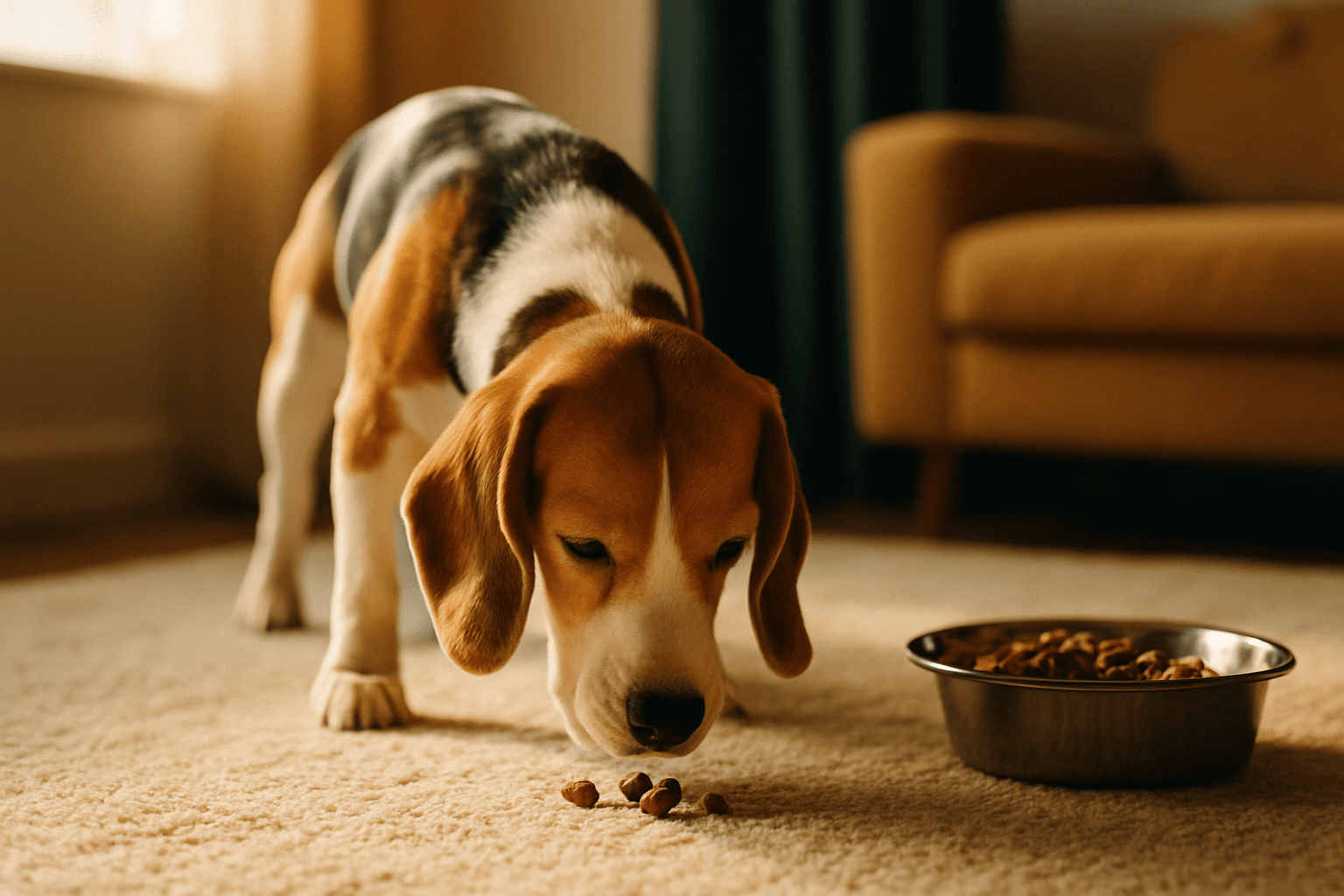
You fill the bowl, set it down, and watch your dog grab a mouthful of kibble -- only to trot across the room and drop it on the carpet before eating. It seems bizarre, maybe even frustrating if you are constantly vacuuming. But this behavior is extremely common, and it has roots in canine instinct, comfort, and pack dynamics.
Understanding why your dog does this can help you decide whether to redirect the behavior or simply let it be. Here is everything you need to know.
The Pack Instinct Explanation
In the wild, wolves and feral dogs compete for food. When a subordinate animal gets access to a meal, the smart move is to grab a portion and carry it away from the group before eating. This reduces the risk of a dominant animal stealing the food.
Your domestic dog may be doing exactly the same thing -- even though there is no competition. If you have multiple pets in the house, this behavior is especially likely. Your dog is simply following an ancient instinct: secure the food, move to safety, then eat.
The Noise Factor
Metal or ceramic bowls can be noisy. When kibble rattles around in a stainless steel bowl, some dogs find the sound unpleasant or startling. Carrying food to a soft, quiet surface like carpet eliminates that noise entirely.
If you suspect this is the reason, try switching to a rubber-bottomed bowl or a silicone mat under the dish. Some dogs stop carrying food away immediately once the noise is gone.
Texture and Comfort Preferences
Dogs experience the world through texture just like we do. Eating off a soft carpet may simply feel more comfortable than eating off a hard floor. The carpet provides a non-slip surface where food stays in place, and the dog can eat at a relaxed pace without kibble sliding around.
This is especially common in flat-faced (brachycephalic) breeds like Bulldogs, Pugs, and Boxers, who sometimes struggle to pick up food from smooth surfaces.
Loneliness and Social Eating
Dogs are social animals. If the food bowl is in the kitchen but the family is in the living room, your dog may carry food to where the people are. This is not a behavior problem -- it is a sign that your dog wants to eat near the pack.
Try moving the food bowl closer to where the family spends time. Many dogs stop carrying food once the bowl is in a social area.
Resource Guarding in Reverse
Some dogs carry food away not because they are afraid of competition, but because they want to guard it privately. Eating in a corner or on a specific carpet gives them a sense of control over the resource.
This is generally harmless unless it escalates into aggression when approached during meals. If your dog growls, snaps, or stiffens when you come near during these carpet meals, consult a certified dog behaviorist.
Bowl Aversion
Sometimes the issue is the bowl itself. Dogs can develop aversions to their food dish for several reasons:
- Static shock -- Metal bowls on synthetic carpet can occasionally produce a mild static charge
- Collar tags hitting the rim -- The clinking sound startles some dogs
- Bowl depth -- Deep bowls can press against a dog's whiskers, causing discomfort (whisker fatigue)
- Residual soap smell -- Dogs can detect cleaning product residue that humans cannot
How to Redirect the Behavior
If the carpet-eating habit is creating a mess, here are practical steps to try:
1. Switch the Bowl
Try a wide, shallow, non-metallic bowl with a rubber base. Silicone slow-feeder mats are excellent alternatives that lay flat on the floor.
2. Move the Feeding Station
Place the bowl in a social area where the family gathers. Avoid isolated spots like laundry rooms or garages.
3. Feed on a Mat
Place a washable fabric mat under the food bowl. This gives your dog the soft-surface experience without the carpet mess.
4. Remove Collar Tags During Meals
If tag noise seems to be the trigger, remove the collar at feeding time or switch to a silicone tag holder.
5. Feed Separately in Multi-Dog Homes
If competition is driving the behavior, feed dogs in separate rooms or at staggered times.
When to Be Concerned
In most cases, carrying food to the carpet is harmless. However, see your vet if you notice:
- Sudden onset of the behavior in a dog who never did it before (could indicate dental pain or nausea)
- Difficulty picking up food or dropping food frequently (possible dental or neurological issue)
- Refusing to eat from the bowl entirely
- Weight loss alongside the behavior change
Frequently Asked Questions
Is it unsanitary for my dog to eat off the carpet?
Generally, no more than eating off the floor. However, if your carpet is heavily soiled or treated with chemicals, it is better to redirect your dog to a clean feeding mat.
Why does my dog only do this with certain foods?
Wet food or larger treats are easier to carry. Kibble sometimes scatters, making it less rewarding to transport. Your dog may also associate certain high-value foods with the need to "protect" them.
Should I punish my dog for eating on the carpet?
No. This is a natural behavior, not defiance. Punishment will only create stress around mealtime. Redirect with environmental changes instead.
Do certain breeds do this more than others?
Breeds with strong pack instincts (like herding and working breeds) and brachycephalic breeds tend to do this more often, but any dog can develop the habit.
The Bottom Line
Your dog is not being difficult or messy on purpose. Carrying food to the carpet is driven by instinct, comfort, or social needs. Simple changes to the bowl, feeding location, or mealtime routine usually solve the problem. If the behavior appears suddenly or is accompanied by other symptoms, a vet visit is a smart next step.
The DogResources directory lists Canadian kennels by breed. New submissions are held for approval before publication. Run a kennel? List it here.